Where Stories Come From

People frequently ask me where I get ideas from and I’ve even blogged about this topic before in “Ye Olde Idea Shoppe.” While I occasionally have a clear connection between input and my vision for output (Oh, for “Such and Such” I was sitting under a bridge when X, Y and Z happened and Bam! I was hit with the story idea), I generally stumble through some lame mumble: Well, I don’t really know exactly. Ideas are everywhere.

Today, however, I’m happy to share a concrete bit of knowledge—including pictures—about where some of my ideas come from.

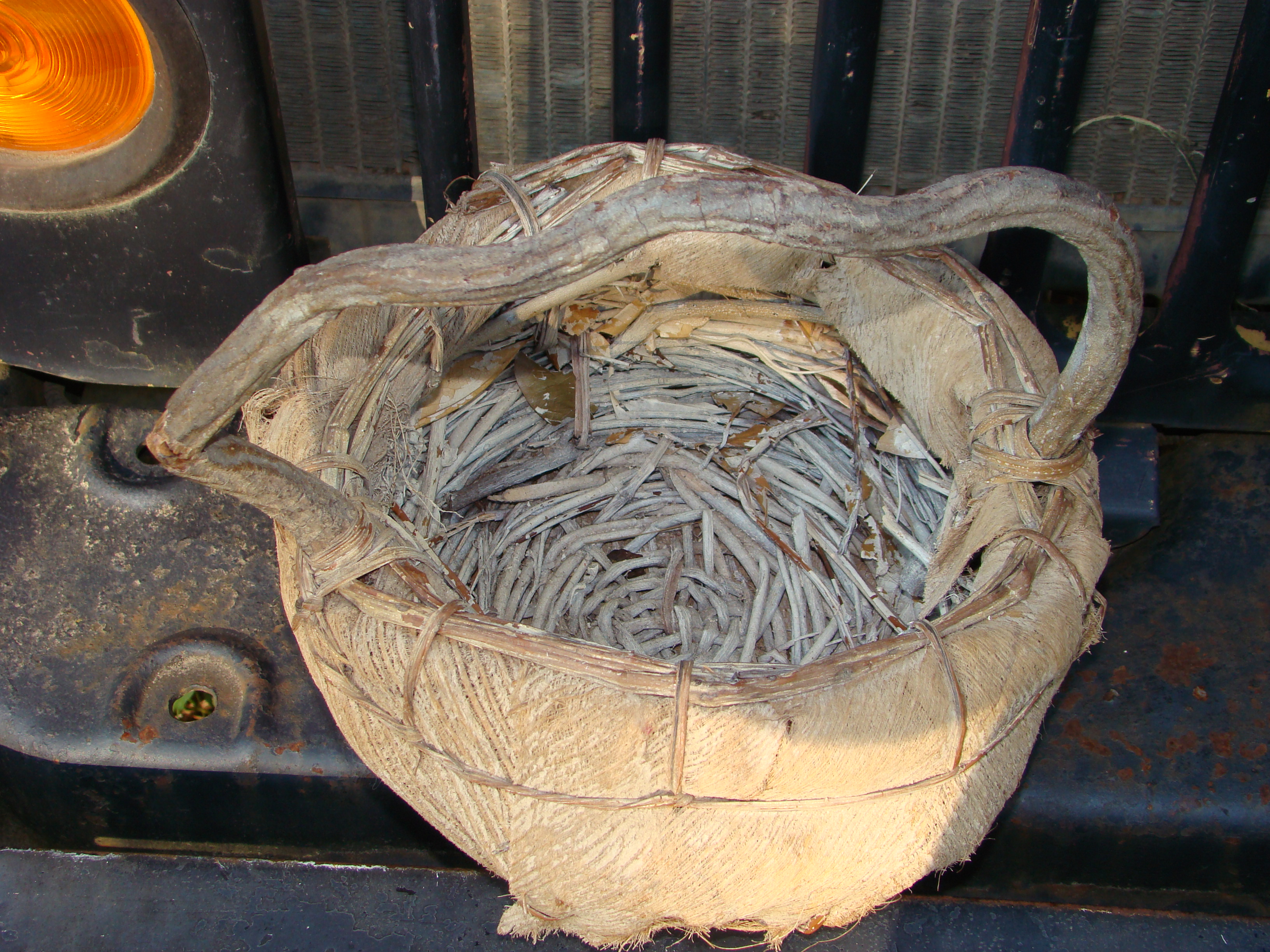
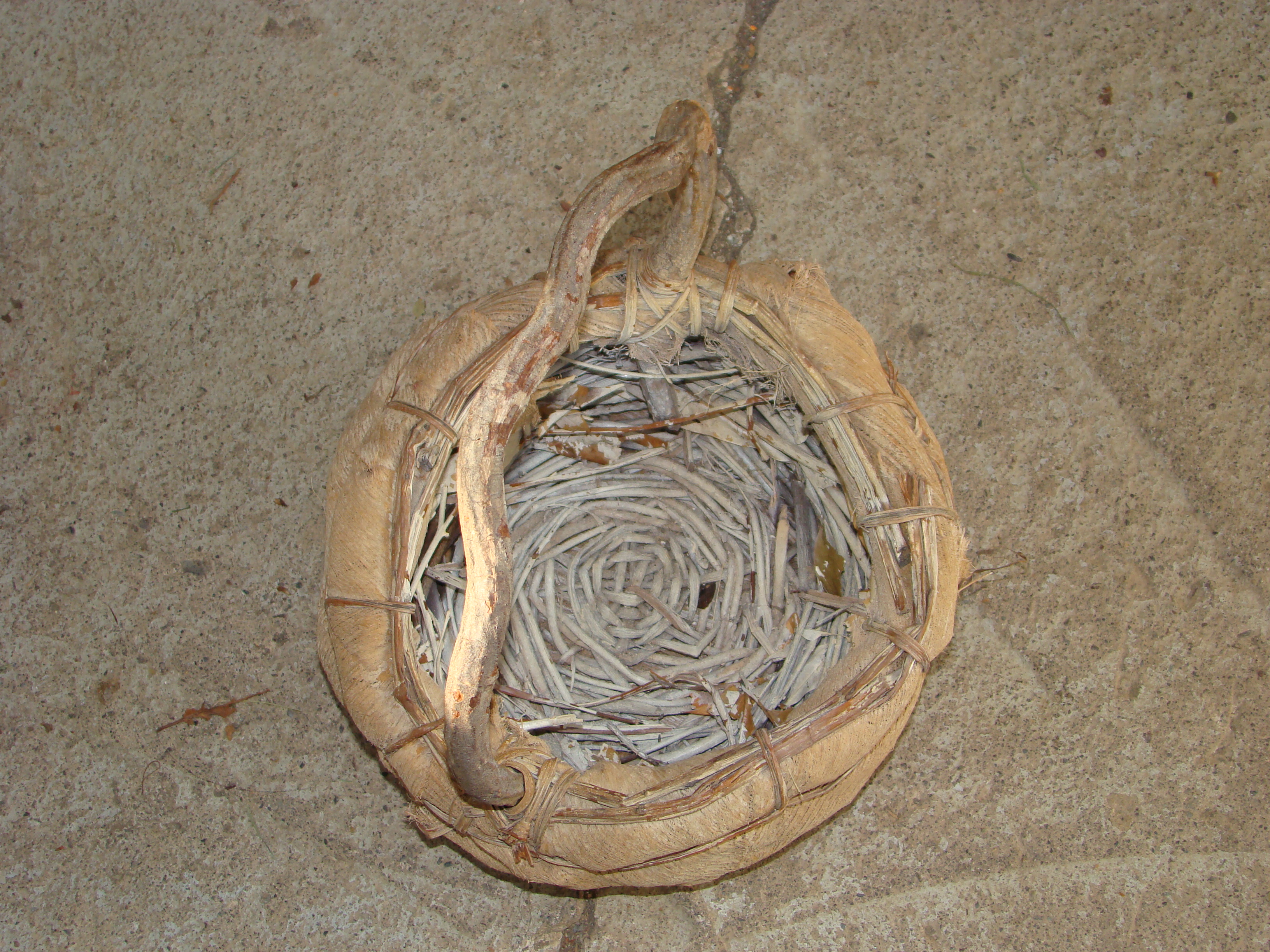
This weekend I was garage saling with my aunt and suddenly this crazy handcrafted basket made of twigs and burlap and leather appeared from out of nowhere.

“It’s a witch’s basket!” my aunt proclaimed with a small cackle. Indeed, it is Someone Interesting’s basket. I do not know what ideas exactly are coming from the basket, but there are many and I’m interested to see which ones I try to put to paper.

How about you? In the mood for a writing exercise? Here’s the basket—in three locations for your imagining pleasure. Write a scene or a short that features it or its owner, be he/she a long time keeper of the basket or someone who has just stumbled upon it.

If you do write something about this basket and want to share, I’d love to read what you come up with: just point me to the place!

Happy writing,
Ev

Hitting the Wall

I thought this hello-I’m-online-again-finally post would be something about the Internet and how I’d always thought that having constant access to the Web was an obstacle to writing. After all, almost every writer knows the mixed blessing/curse of such easy (fun!) access to, well, everything . . .

And I thought you’d all be surprised that when I found myself without access for three weeks, rather than write up a storm, finish eight projects, and win a Pulitzer (Yes, I seriously thought the World Wide Web was that much of a holder-backer!), I didn’t even open my novel. I wrote nothing new in it or for it. Not a word.

I can hear your disbelieving, shocked, “Whaaaaaaat?” from here. And I know. It’s absolutely bizarre. I tried to explain the strange result. I thought maybe it was because the draw of expected e-mails, the intrigue and interest of new blog posts, the fun of forums lured me to my computer and then, once I was done procrastinating, I felt compelled to write since I was on my computer anyway. And maybe there’s something in that.

But, as I’ve had my Internet back for almost a week and no new words in my novel have poured forth, despite being at my computer often and regardless of the fact that I have a lot of ideas churning for my story, I had to wonder if maybe it was something else keeping me from my story.

Then two nights ago I was getting dressed in my bedroom and I heard an animated, filled-with-laughter discussion between some family members and my husband out in our driveway. When I came out to say “Hi,” however, there was no one there. Just my husband. In the living room. In his chair. I still don’t know who I heard; it was very weird! And just like one of those old fashioned locks where pressing just the right spot triggers all kinds of sprockets to sproing and gears to engage, I knew what was wrong, why I hadn’t written!

In every novel I’ve written, I’ve come to place where I hit a wall. Where my write-by-the-seat-of-my-pants, no outline, no plan, style absolutely fails me. Where I’m sure that’s it, the book is dead, there’s not enough story to continue with . . . Unfortunately, though it’s obviously part of my writing-system, the wall always reveals itself differently. I never see it coming until I crash into it.

And this time the wall was its most subtle yet, just a series of quiet, unsettling questions that wouldn’t answer themselves and general angst that wouldn’t articulate itself . . .

That strange overhead conversation and laughter that I still have no idea about where it came from was the answer, however. I know what my book was missing and where exactly it’s going now. It does call for a rewrite right away, but I’m okay with that. I used to believe in writing the whole first draft, no stops. Now I often stop when I realize something’s not quite right and go back and fix it immediately.

Tomorrow I will commence a read through with notes, then the rewriting, then a 1-3 line plan for each chapter until the end. I’d be glum that it looks like I won’t hit my goal of having this book at third draft by October 21st, but I’m too happy: the Internet has been found innocent and my book is back on track. The wall wasn’t impenetrable. It ended up having a lovely huge arched doorway with a gothic-styled gate and a key just for me hanging on a velvet cord.

Is it weird to post a link to an interview of me?

In answer to my title’s question . . . perhaps. But I can’t help it. The questions were really fun and I’m excited and flattered to be featured on one of my favourite blogs, scribo ergo sum–a blog that just coincidentally happens to belong to to one of my favourite writers, Jen Brubacher. It is the best coincidence of all that she is also a dear friend.

Anyway, I always love a chance to talk about writing and if you’re at all interested in hearing about my first publication, how I got into writing and editing, what my opinions about ebooks vs. traditional books are, what my favourite writing books are, plus other intriguing writerly things ;-), please check it out at: http://jbrubacher.blogspot.com/2010/07/interview-with-ev-bishop.html

Slow Writer

I’m used to being a speedy writer, easily getting 1000 words, and usually closer to 2000 or 3000, on any given writing day—and that would just be on the fiction side, not reflecting my non-fiction work, blog entries, column ideas, or miscellaneous writing projects and experiments . . . And then I took a regularly-scheduled day job. I’m slowly getting into (and loving!) my new routine, but I was a bit worried a few days ago when I considered what it might be doing to my writing.

While I’ve been writing almost daily in June (to my huge relief, phew—in May I was worried about when I’d be able to return to that!), my word counts per session are way down. 380, 431, 494, 650, 733, 198 (gah!) . . . I only broke 1000 once this month. (Again though, not counting any non-fiction writing.) Yikes, my whole aim in getting a day job was to alleviate financial stress that was slowly quashing my creative joy—now was I in danger of potentially crushing my progress? Was I stuck in some lose/lose scenario? Absolutely not.

I did the math (funny how more and more as I get older I see the beauty and inspiration in numbers!); all those low numbers actually averaged 500 words per day. Even if I only write 20 days a month and even if I only get 500 words per session, that’s 10K in a month or, even more excitingly, 120K a year—a full novel, plus. And I suspect that most months I’ll write more than 20 days—and more than 500 words.

My worry changed to renewed excitement and fresh vigor. I love how my writing, no longer burdened with the need to generate money to live, is free to be my whimsy and passion again. And I especially love that I’ll be able to keep on track (easily!) with my novel a year goal, even if I keep being “slow.” I’m still striving to be a career novelist, hoping to write novels for enough money that I can work at them full time, writing even more of ‘em . . . but it’s nice to know that until that day comes, I don’t have to be a starving artist or sacrifice my writing goals.

It was a lovely realization and I’m thrilled to consider what my new routine will do for my writing.

How about you? Do you enjoy the luxury of writing full-time and still making ends meet? (Or perhaps struggle to make ends meet, but feel the pay off of doing what you love most makes it worth it?) Or do you balance your Art and a job/career? What are the benefits, pay-offs, or downsides of the type of writing life you lead?

Filling the Well

Many years ago I quit writing. The cessation lasted two years and almost drove me crazy. When I figured out what I needed (to write, regardless of the consequences—or maybe because of the consequences of not writing), a book called The Artist’s Way by Julia Cameron was incredibly, incredibly helpful to me.
Though I’ve forgotten many of the specifics of that great book, one of Cameron’s suggestions continues to be part of the philosophical foundation I build my writing life on: Fill the Well. It’s basically just the conviction that all ideas come out of a life lived, so rather than cloister yourself away to write every minute you have time because dammit-you’re-a-writer-and-writers-write, you should do things that aren’t writing related per se without guilt, because every activity, experience, moment with others, pours into your creative well and if you don’t have non-writing time, eventually you won’t have a well to draw from—or what you do manage to dreg up will be stale and bitter.

It can be easy to forget to freshen the well. If you’re like me, your life is busy and you covet writing time and feel guilty if you have time that you could write, but don’t use it “productively.” And there’s wisdom in our you-gotta-plant-your-butt-tyranny—but there’s also a line where too much discipline squashes—where I find myself writing only out of a sense of obligation, not that agony/ecstasy feeling of I MUST WRITE TO GET THIS ALL OUT OF MYSELF OR I WILL EXPLODE.

When my writing has that “Ugh, I have to write,” versus, “I get to write” feeling, I know I have to spend some time doing other things, and ironically, it’s usually when my work/life schedule is at its most hectic and my writing time is already at its scarcest that this need to make time to do other things is crucial.

My family is out at a cadet camp this weekend and after a ticket-selling shift yesterday (good volunteering mom, eh?) and getting a brochure I needed printed for a client, I planned to get A LOT done, because I have (like always, it seems these days) A LOT to do.


Instead, I:


Made a very yummy veggie and cheddar wrap and drank two glasses of wine, sitting in the sunshine with Twisted by Jonathan Kellerman (famous novelist, new to me—am enjoying very much!) 


Then I had a nap. Until 6:00 p.m. 


Then I worked in my delicious smelling flowerbed and yard until 9:00. 

Then I poured more wine, tossed up a stir-fry and watched TV—what a treat. 

Very rejuvenating. Just what I needed!

Today has been low-key too: sleeping in, drinking coffee, reading short stories—and I might clean my house a bit . . . But I’m starting to feel a building urge to get to my novel—there’s a scene burning, a character screaming to be let out . . .

What about you? Do you have similar feeling about the importance of sometimes NOT writing?

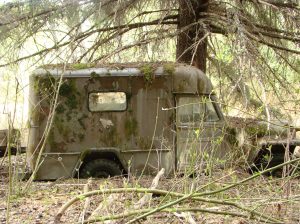
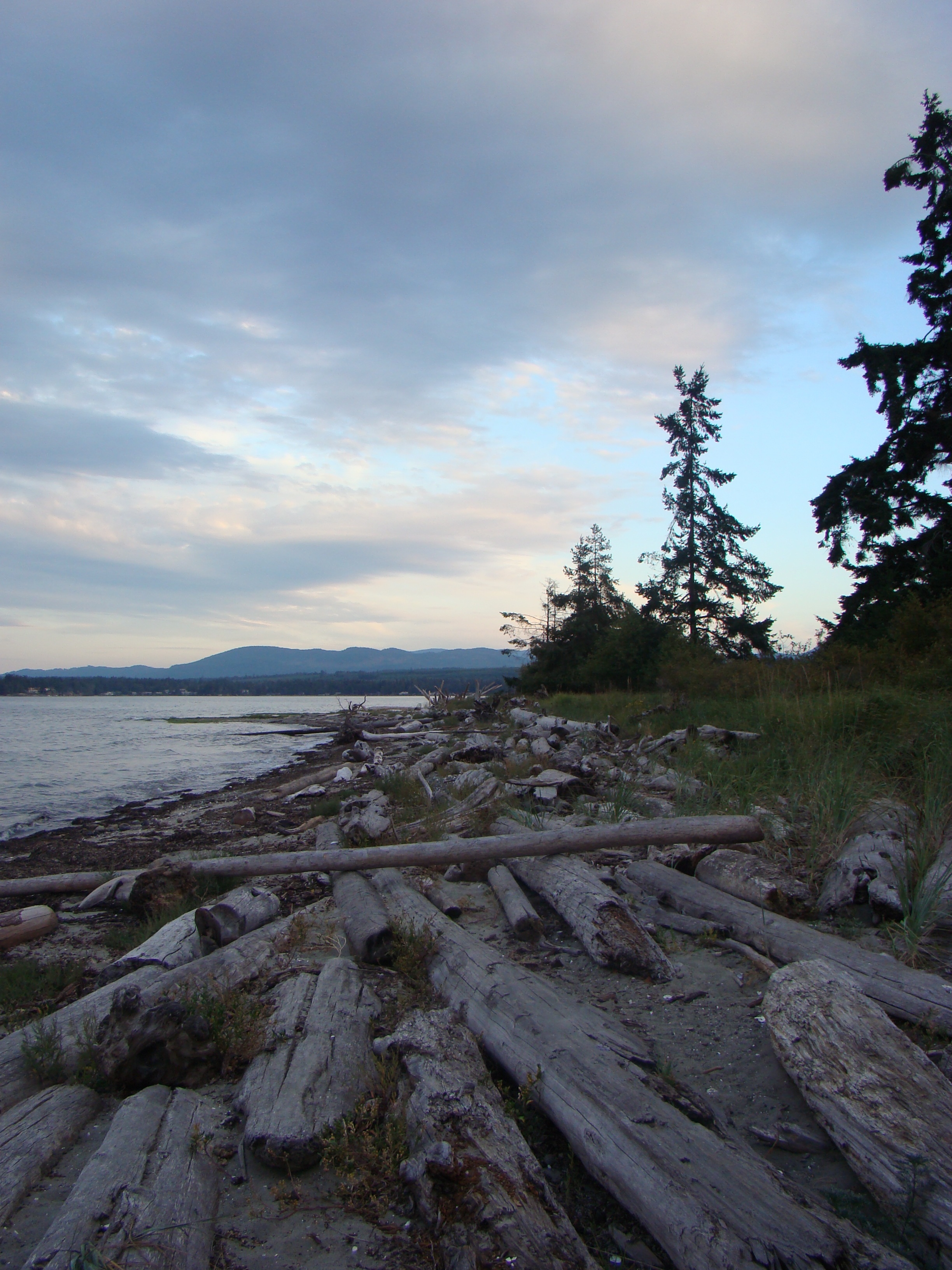
p.s. Where was that jeep found? Who did it belong to and why was it left? Last weekend found me wandering, filling the well—I hope the old ghosts don’t begrudge the pictures I took . . .

Going Through Changes

I started a new job April 27 and as I was driving home from work the first Friday, reflecting on the week’s training, the thought occurred to me: I’m not a kid anymore.

It was a happy thought, triggered by the realization that I’m, for the most part, free of the obsessive worry to please that plagued me in younger years. I have confidence. Or at least far more than I used to

I attribute this change to a myriad of ongoing experiences. Running my own business has shown me that I’m competent in a variety of areas. Writing has given me a safe place to vent and to explore, while providing a sense of fulfillment that makes “job satisfaction” less critical to me. I want to do well at work, because that’s my personality type, but my job is a job, not my life. Aging itself, which has lent perspective about what to concern myself about.

This “not a kid anymore” strain of thought was lovely and apropos as it occurred on the eve of my 38th birthday and coincided with the realizations my main character has made lately.

I’m fascinated by how changes in our personalities or general approach to life can sneak up on us, catching us almost unawares—like until we’re put into a position where our personality/beliefs, etc are tested, we’d never know they’d deviated.

While my change in self-perception/outlook was positive, sometimes these sneaking deviations from formerly held views and approaches to life are negative. The person who wakes up on his 30th wedding anniversary and realizes he doesn’t love his spouse (or that she has never loved him). The person of religious faith who, after years of devotion, worries that their faith is baseless. The fifty-year-old who realizes now that their children are fully grown that they’d made the same serious mistakes raising them that their own parents did . . .

The most powerful part of these inner revelations is not the actual change in our thinking, but the awareness of our change and what we go on to do in light of it—how it affects the way we live and the way we relate to people in our lives.

The most interesting novels to me show characters grow and develop (and regress!) over time—they explore the twisty path of human experience, not just event.

I hope your characters have pivotal moments—large and small—in their interior lives, perhaps kindled by action happening in the story, perhaps intrinsic to, thus feeding the story. It doesn’t matter which comes first—the plot, then the characters’ change and growth or a character’s change that leads to some explosive plot, but inner change has to be there.

We shouldn’t create static characters, because humans aren’t static. Even in the silliest, most simple ways they change, grow, discover—and are changed by noticing that they do.

So what do you think? Do your characters change in big and small ways through your story or series? Do you agree that it’s important?

Wherever you go, there you are . . .

Photo by Ev BishopOnce upon a time, a long time ago, I was sitting at the end of a wooden dock in the purple-not-quite-dark haze of a warm northern summer night with a dear friend. We were discussing places we’d been (or he was) and places we hadn’t (me, everywhere; him, it seemed then, nowhere). I confess I was expressing a bit of jealousy and at one point he looked out over the shimmering dark mass of the tiny isolated lake we visited, and his side profile was a perfect black shadow.

“Nah, you don’t get it,” he said. “Wherever you go, you bring yourself. After about two weeks in any place, you stop being a visitor and they’re just the same as anywhere else, because you’re the same person. So if you enjoy where you are in general, you enjoy the place. If you aren’t happy in general, you aren’t happy in a new place.”

It was a life changing moment, though I didn’t realize it then; it grew on me over the years as the wisdom in his casual words came back to me time and again, applying aptly to so many facets of life.

And just recently, a variation of its truth struck me in how it relates to reading and story. I was commenting on a short exercise one of my friends did called *The Iceburg. In her reply to my comments, it became obviously, embarrassingly clear that I had completely missed her intended “understory” and put my own feelings and sentiments and past onto the character and his motivations/feelings.

I felt kind of stupid, but then I didn’t, because I realized that’s what readers do. They bring themselves to the book. To the short story. To the poem. Despite our best and most skilled writing, despite our subtle pointers and sometimes even didactic scenes meant to reveal something specific, readers will immerse themselves, with their personal histories, their guilts, their persuasions, in your story.

So can you challenge readers whom I’ve basically just said come into your story with preconceptions, prejudices, set ideas, notions, etc? Absolutely. The power and joy of reading—and its value—is that through story, you experience a new or different world and can add others’ experiences to your own, enlarging your thinking and ways of seeing/perceiving the world.

But equally absolutely, you will sometimes be surprised by what conclusions a reader arrives at about your story . . . hopefully not in too negative a way—my friend wasn’t offended—I hadn’t said anything offensive—she was just curious about how I’d gotten what I had from my read . . . and quite simply this was how: her character reminded me of someone I knew and I put all my “stuff” with that person on to her character.

So what does this fact that the reader brings him/herself to the story, thus colouring its reading, mean for us as writers? At least two things: 1) We should write our stories putting as much personal heart, care, and detail as possible. They are ours. 2) We should share our stories, knowing that once we do, they are ours no longer—or, at very least, not in the way they were, because now they are the reader’s. Precious and loved—or hated and scorned—perhaps for reasons we skilfully intended, perhaps for reasons that have nothing to do at all with what was actually in the story we wrote.

For me, it takes a bit of the pressure off—yes, I want to write stories that people love, relate to in some way, “get” . . . But if they don’t, perhaps it’s not me. It’s them. 🙂


* The Iceberg comes from a book of writing exercises that I recommend you buy: The 3 am Epiphany by Brian Kiteley.

If you’d like to try the exercise yourself—it’s a great one—here you go: “Write a small story or storylet that works with the idea of an iceberg, whose great mass is mostly below the water and therefore unseeable. Write a scene in which much of the actual story is not told. Let us feel the rest of the story that bobs quietly underwater, but don’t let us see it concretely. 500 words.”

If you do the exercise, I’d love to hear how it went, or better yet, let me read your resulting short story.

Souping it up

I’m a bit of a soup addict. Whenever I’m stressed, inching toward depressed, or feeling blue about something, I make soup. Chopping and grating, bringing to a boil, simmering. . . tasting. The steamy aromas of mingled garlic, onion, occasionally ginger . . . Mmm.

There’s something Zen about cooking in general, and making soup from scratch especially. And like my aunt says, even if you can’t cook, it’s hard not to make great soup, so long as you use quality ingredients. It will sound corny, but I think she’s right only to a point. Something of yourself has to go into the pot too—your love, your affection, your hope, your well wishes . . .

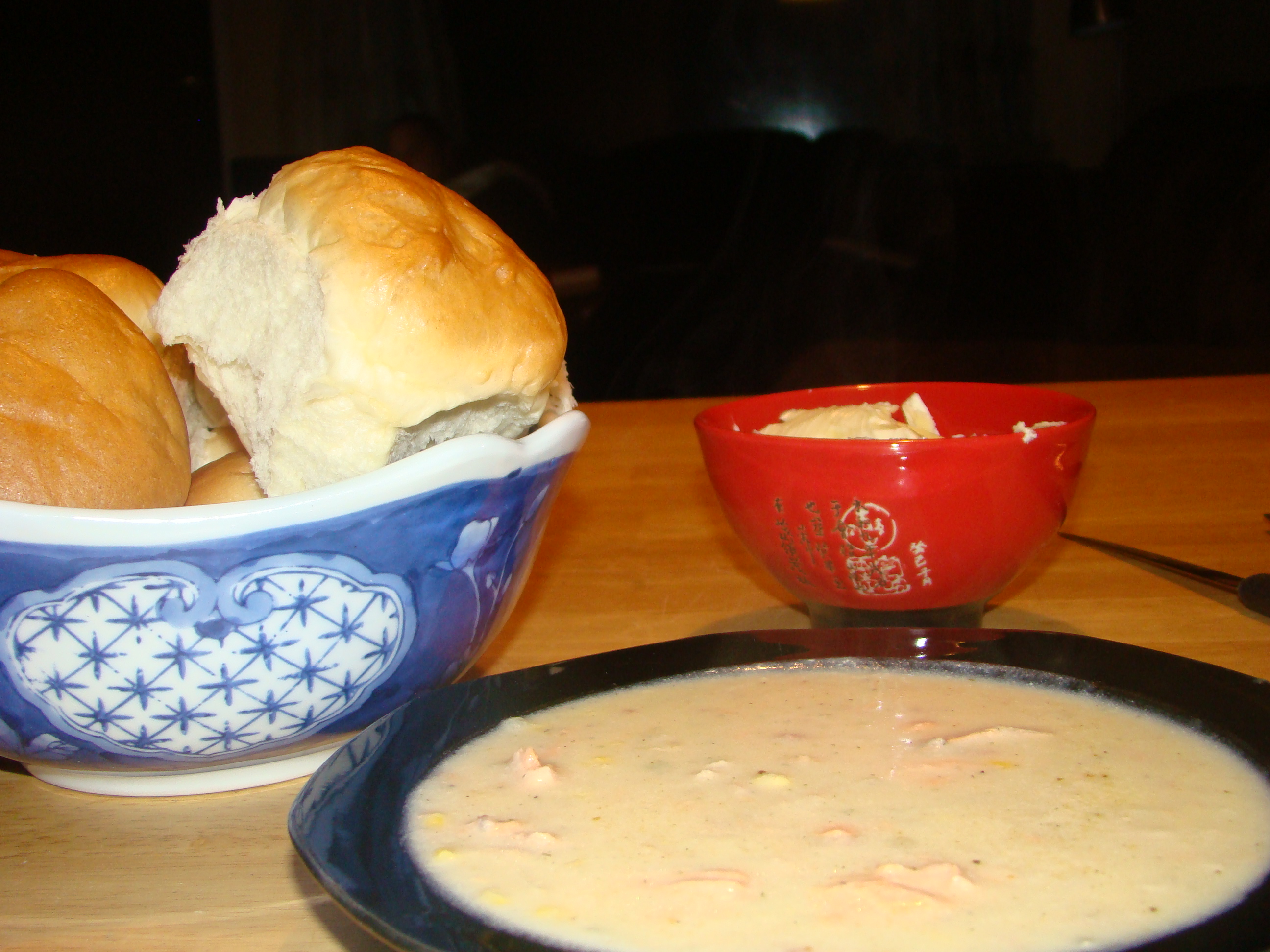
Yesterday I made salmon chowder (from a Spring my son caught last summer) and while I consider myself a decent cook, I impressed even myself. I was wowed by the scrumptious creamy, savoury results. I used a recipe from Allrecipes.com, then modified it (as is my style) ‘til the concoction in my pot could never be recreated using the recipe card sitting on my counter.

As I cooked (and tasted!), my mind wandered all over the place, but especially back to the novel that I’m working on. In the last scene, written just shortly before I started dinner, my MC was making soup. And there were soup references in my last novel too. The books aren’t the type that will be marketed at gourmands, with recipes in the back (though I do love those). In fact, the scenes are very brief—I don’t know if a reader would even consciously remember them, but they are, I realized, symbolic.

Soup is the epitome of comfort food, belonging and home. Every culture has its own variations of the dish, and while soup can be whimsical, there’s nothing trendy or passé about throwing things in a pot to simmer and blend all together into something, always a bit different, always good. Soup, regardless of its name, is as old as the human race.

And what does my character want and crave, but not have? Family. A sense of belonging. A home.

Food and eating of all kinds (not just soup!) has weighty (no pun intended) positive and negative connotations for the character as an individual and within his/her relationships. What your character eats or doesn’t eat, and the way they eat—standing over the kitchen sink, or with wine and candles even when alone—says a lot about their personality, their desires, their family background, their financial situation and so much more.

The way characters prepare food (or don’t) also shows who they are, how they perceive themselves, and how they want to be perceived by others. I don’t know what this says about me, but when I make soup, I feel like a good mom. What does your character feel like? A house elf? A slave? A fortunate soul to be able to cook when so many people in the world can’t put food on the table?

We shouldn’t make every scene about drinking tea or buttering fresh baguette, but we should remember that all humans everywhere eat—or need to eat—and have strong feelings about food. Sneaking in small sensory details about this primal need can be a great way to reveal information about your character.

So how about it? Have you ever considered what the food references in your story might be saying about your characters? Would adding some details about eating somehow enhance your characterization?

Do-it-yourself online writing retreat

The writing life can be a tad isolating, so a few years back, I started my own writing forum, Procrastination, as a way of keeping my treasured friends-who-also write close as we grew further and further apart geographically. We’re a small board; maybe five of us post regularly, with only three or so more than that who pop in every couple of months. We’ve even taken to (most years) meeting up for the community-building/inspiration-boosting/writing-celebration of them all–the Surrey International Writers’ Conference.

Then this year at SiWC, late Saturday night, missing one of our Procrastinators who couldn’t make the conference, feeling sad and a bit blown away that our wonderful weekend was almost over again already, we started discussing (or maybe bellyaching, just a bit ;-)) how Surrey gives us energy/motivation for our whole writing year, and how the conference never arrived a moment too soon . . . In fact, wouldn’t it be great if we could afford do two a year–SiWC, plus some other retreat or something six months or so later?

Enter fantastic brain wave! It occurred to us that we already had a perfect meet-up place, and instead of just using it as a message/conversation board, as fun and valuable as that is, why not use it for something a little more planned out. An online writing retreat! Our set up was simple.

I created a private thread (only people who had signed up ahead of time could see the thread when they entered Procrastination.) On the set day, at a set time, we each posted one exercise. Then we spent that full day, plus one more day writing according to our own schedules. On the third day, again at a set time, we each posted our results to each exercise (with no disclaimers about perceived quality, etc). Everyone who signed up committed to reading and responding to each participant’s posts. The result was fantastic–much better than we’d even anticipated in terms of fun, inspiration, and concentrated, results-based motivation.

We all came away a bit in awe that we could write so much in such a short time period–and that a lot of it was “keeper” material, stuff we wanted to do more with, possibly lengthen, possibly tighten and polish and submit as short stories.

Seeing as it was such a success, and how (for now) our ability to take in bigger conferences/retreats is limited to annually, we decided to make it a seasonal event–our spring writing retreat is just around the corner; I’m already excited and brainstorming what exercise I’ll offer.

If you’re part of a small online writing community and feeling a bit low energy in the ol’ writing department, I highly recommend organizing some form of your own online writing retreat. And if you don’t have that kind of online community, but long for a bit of a writing extravaganza/refuelling? Well, come visit me here again soon. A while back I did a writing retreat for one and I’ll post a bit about that in a few days.

Happy writing!
🙂 Ev

Overnight success

A few years back I was listening to a radio interview of a musician who’d just made it big, and the DJ asked her, “So how does it feel to be an overnight success?”

She laughed. “People keep saying that and I have to keep telling them my overnight success took 13 years of really hard work.” She went on to say that her “secret” was to learn to keep working through disappointment and rejection, to keep focused on her love for the music she was creating.

I use her words for encouragement and motivation in my writing life, often—Don’t give up, Ev. Keep writing. You love it and you’re getting better and better. Persist, persist, persist!

Just before starting to write this post, I plugged overnight success took 13 years into Google and was amazed by how many hits it got. Apparently this long arrival of “overnight success” is the rule not the exception—10 years, 13 years, 15 years, 20 years, 32 years—all those were referred to as overnight successes, triumphs, sensations. . . .

And it makes sense. The Arts used to be referred to as Disciplines, a name that better reflects the nature of creative pursuits. I also like referring to writing as a craft, because of the word’s connotations of work, practice, honing, refining . . .

Then just last week, my attention was pointed to an article from August 2006’s Scientific American, “The Expert Mind” by Philip E. Ross. He makes a fascinating, well-supported argument for the idea that “effortful” study and motivation are far larger contributors to success in academic and artistic fields than innate ability.

Here are just two of the quotes that really struck me:

“The 10-year rule [coined by Herbert A. Simon of Carnegie Mellon University] states that it takes approximately a decade of heavy labour to master any field.” ~ Phillip E. Ross

“At this point, many skeptics will finally lose patience. Surely, they will say, it takes more to get to Carnegie Hall than practice, practice, practice. Yet this belief in the importance of innate talent, strongest perhaps among the experts themselves and their trainers, is strangely lacking in hard evidence to substantiate it.” ~ Phillip E. Ross

As I am often dubious about my talent, I find great hope in the studies that Ross references. I love all things word and story related, yes. And sometimes I think I have a modicum of talent, maybe. But I know too many people whose natural talent for storytelling exceeds mine to the point that I should have given up long ago if mastery and success were purely talent-based.

What I do possess, however, is tenacity. I’m stubborn. Always have been—childhood pictures prove me out: mini-Ev, all of four-years-old, brow furrowed obstinately, jaw jutting in firm commitment to my focus. And I have a strong work ethic (my euphemism for obsession ;-)).

But even importantly, I find joy and challenge (yes, even with the frustration!) in the learning, in the toil, in the striving to say it better, be more evocative, be more honest.

There’s a small, weird part of me that knows success as the world calls it won’t be my idea of success at all. The point of writing for me, the fun, is the growth, the power of developing writing muscle, and (I’m sorry, it’s the worst cliché!) the journey . . .

I’ve been writing seriously, working on my craft, for just over ten years. Do I hope to see my novels in print soon? Absolutely. I want to share my stories, to give (hopefully) a bit of what so many others have given to me through their carefully scribed words and thoughts. But when “it” has happened, when I have a book or ten out there, will I think I’ve arrived? Nope. I hope to be the kind of writer whose best work is always yet to come.

So here’s to the work and to overnight successes for us all—be they tomorrow, ten years, or even more from now.

Happy writing,
Ev