A Quiet Christmas?

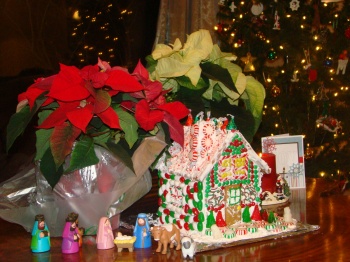
Cozy Ginger Bread HomeWhen I was a little kid, Christmas was busy, like, I think, Christmas tends to be for many people. I had a huge extended family that lived nearby—or nearby enough that we could go visit, but not so close that it was a no prep necessary jaunt.

We’d load up whatever vehicle my dad was smitten with at the time with boxes of food to contribute to the feasting, wrapped presents and snow clothes—and changes of clothes—and head down the highway, a fairytale drive of frozen white and blue, to Hazelton and Smithers.

Both sets of grandparents lived on big, out of the way farms, and I can’t remember green Christmases in either place, ever. We’d drive up, inevitably once night had fallen, and at either property, the effect was the same: magic. The long winding road that for the trip had seemed a snowy fantasy-realm—was suddenly transformed by warm yellow lights glowing in the darkness, brightening the snow, beckoning us in cheerily.

And when I was little, Christmas was loud.

From the moment we were out of the truck and the door of the house was thrown open and a din of voices greeted us, the noise never ceased ‘til we left.

And I adored it. I come from a long lineage of arguers, game players, big eaters, big talkers and big jokers. Our gatherings were, at least to me, the epitome of festive. Us kids would, literally, scream ourselves hoarse playing games like Pit and Risk.

I remember the year it changed—or perhaps “changed” is too strong; “developed” is better. My idea of an ideal Christmas developed a quieter side.

I was eleven or twelve and my Grandma Higginson, who owned a floral shop for many years, sent me a pre-Christmas present—a miniature Christmas tree that stood about 2 feet tall and was factory strung with tiny bright multi-coloured lights that twinkled.

I was entering an era (er . . . or, short-lived phase) where I kept my bedroom immaculately tidy, and I don’t think I can adequately convey the pleasure I derived from decorating my room with that little tree. I placed it on an antique wooden desk I used for writing letters and the like (I really haven’t changed that much in 28 years!), and bought little gifts with my babysitting money, which I wrapped and placed beneath the tree. I purchased my first Christmas album (Amy Grant’s cleverly titled “A Christmas Album”—still one of my all-time favourite carol collections).

Thus started my own small tradition. Playing games, eating, laughing and massacring carols were still some of my favourite ways to ring in Christmas—but I decided I should spend time in quiet contemplation, too. I’d hide out in my room after everyone else had gone to bed or was eating yet again, with eggnog and a journal, planning out my new year in advance.

And it’s a tradition I’ve kept. My family is still loud—though not nearly so big as it used to be—and we all love to eat, argue, and play games into the wee hours, but I still sneak away—or stay up for a bit after the others have gone to bed—to dream by the tree and jot down thoughts and plans by the soft twinkling glow of the sparkling Christmas tree.

I’d thought I wasn’t feeling into Christmas this year, and who knows, maybe a noisy one won’t have much appeal, but I am looking forward to the quiet—Ah, who am I kidding? I’ve already told one of my brothers to bring his Just Dance games for the Wii and that him and me, plus siblings, spouses, nieces and nephews will have a dance off party.

So . . . it will be loud and crazy and my family and I will miss the people we miss and celebrate the ones we’re with—but I’ll seek out my quiet corner eventually, to think and pray and just to be. I hope you find a peaceful spot to be this holiday, too.

Merry Christmas!


“Quiet Christmas” by me, Ev Bishop, was originally published in the Terrace Standard, December 19, 2012 as my monthly column “Just a Thought.”

November’s River

A friend wrote me a note the other day, part of which read, “ . . . It only reminded me that I used to write and that I don’t anymore and that is only one thing in a long list that I have lost along the way.”

Her words came back to me this Saturday as I considered the stark landscape of the depleted Skeena beneath the old bridge. Rocks, bare. Trees—no, trunks. Severed. Separated. Set apart. Stripped of bark and branch and leaf. Rootless. They looked like ivory bones on the earth’s silty guts.

She needs to get back to the creative things she let go of, I thought. She needs to.

Fall is an introspective season. Perhaps it’s because the weather forces a physical slow down and a turn to inward contemplation. Or perhaps it’s more primal: as nature goes dormant or dies, thoughts tune to the occurrence of the same in other parts of our lives. Or maybe, for me, it’s more personal. My parents both passed away in October, and fall seems indelibly linked to my own mortality. Whatever the reason, this time of year I find myself thinking about how I live and what I put my energy into.

I had a hard week. Month. Year. If it wasn’t for my writing, I don’t know what I would’ve done. Sounds melodramatic—and maybe it is, but I don’t care. I look at our world, at the things that go on in it, and I don’t know how—without music, without art, without poetry and stories—people stay sane.

Most people loved some creative pursuit, I hate to say it, when they were young. What is it about adult life that makes so many of us forsake the things we enjoy most? Sometimes it’s because dreams and desires honestly change, but a lot of time (maybe even most of the time) we give up those passions, those unique activities that make us us, out of fear, out of misplaced feelings of obligation, out of pressure from people who don’t get it (and don’t get us even if they love us).

I’ve long battled feeling selfish. I spend hours by myself—and I need more than I get. I don’t keep a tidy house. I tune my family out sometimes. (I also love them sincerely and passionately, and try really hard to know them, respect them and give them space to be who they need to be, etc.—though that’s a whole other column). I can be distracted—and unapologetically disinterested in some things, like small talk.

Yet my writing has made me a better wife, mom, person. I think. I hope. It is good for people to pursue their passions—and as a parent it’s critical. We have to model what we value: thoughtfulness, a pursuit of things with intrinsic value—things with cultural, emotional, mental, or spiritual significance. Society will do all it can to sway our children (and us!) to a life of materialism, vapid pleasures, and looks-based self-worth. We need to counteract that influence the best we can, and I think the best way to do that is to show the rightness of thinking, learning, and expressing.

Letting ourselves sing, play an instrument, carve, write, garden, fish, quilt, sew, work in a shop—the list could go on and on—is crucial in so many ways. It helps us deal with stress, with sadness, with anger. It reminds us that joy can co-exist with sadness, beauty can survive hard times, and one can find peace even amidst inner storms.

The Skeena is lonely in November, but there’s beauty in her sharp grey-on-black-on-white lines and something inspiring in her resolute journey onward. If you have regrets about things undone or neglected, make this the year you take up that dropped course, cause, art, or hobby. Live as you feel you’re supposed to. That’s the thing about things that get lost along the way. They can be stumbled upon later. Found. Reclaimed.

This piece was originally published in the Terrace Standard, November 21, 2012 as my monthly column “Just a Thought.” I’m sorry it’s taken me so long to share here (normally it would’ve been archived at evbishop.com, but that’s another story as you may know!). “November’s River” is not your typical December reading, but ah, well . . . We all experience November rivers at some time or another. I’ll post something lighter and Christmassy when I’m . . . feeling lighter and more Christmassy. 🙂

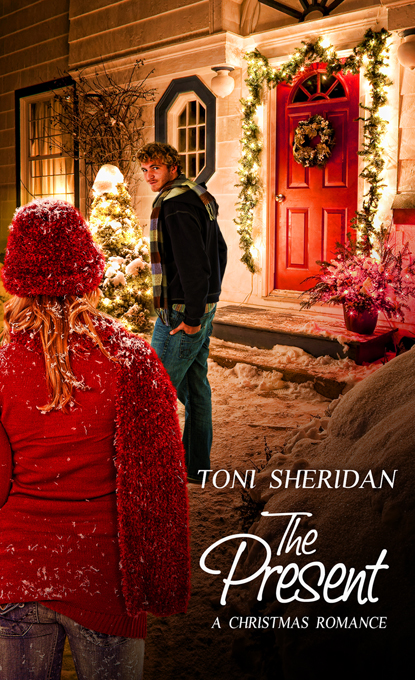
The Present by Toni Sheridan

You may or may not have seen the post on evbishop.com where I shared my excitement about having sold my first story to be published under a pen name . . . UNFORTUNATELY I can’t link to said news because my website is still down . FORTUNATELY the hacking-jerks can’t corrupt my happy feelings re: so much good news this month. 🙂

In addition to my short story “The Picture Book” being published by Every Day Fiction magazine last week, I was just notified that The Present by Toni Sheridan has hit the virtual shelves. As I’m quite close to Toni (ahahaahahaha!) I am thrilled for her news. If you’re looking for a fun, romantic read (that inspires warm cozy feelings and maybe some thought, too) to get you in the Christmas spirit, I’d love for you to read it.

Well, take that hackers! (I don’t know . . . Maybe I should keep my website down permanently. It seems to bring good news for my writing life! :D)

Hope you’re having a happy reading/writing week, too.

~Ev

p.s. Check out THE PRESENT’S cover. I love it!

“The Picture Book” by Ev Bishop

You may have read my moving note here. Well, disregard it. I’m baaaa-acck.

My lovely website (Let me praise it, please. I need to in memorial) got hacked and as I’m the middle of Nanowrimo, I don’t have time or mental energy to spend hours fixing it right now. But I have exciting news I want to share, so what better place than here?

I’ve talked about Every Day Fiction Magazine before, and I’m thrilled to announce that they have published another one of my stories: “The Picture Book.”

If you, like me, love short stories, please hop over and read it—and comment, rate it, and share it if so inclined. Enjoy. 🙂

Happy writing and reading to you this week—and if you have a website, go and make sure it’s safer than mine was!

Moving Day . . .

As much as I adore *Wordpress (and I do, I really do! :D), I’ve decided to act on a long contemplated decision: I am moving my blog, Write Here, Write Now, to my main website evbishop.com.

It’s labelled, cleverly, “Blog” in the menu bar, or you can just click and find it here.

Please follow me over there because I’ll really miss you if you don’t. There’s a sticky post at the top of the page where you can sign up to subscribe to Write Here, Write Now by e-mail . . . or (top corner of screen) you can set it up as a RSS feed to wherever you best like to read the blogs you follow.

I won’t be updating this site anymore, but I’ll leave it active for awhile so that if you don’t happen by super regularly, you’ll hopefully still find me.

Thanks!

Happy reading, writing, and whatevering,
🙂 Ev

p.s. The whole of this blog has been exported to its new home already, and if you’re thinking of a similar amalgamation of your blog and website, but are worried because it sounds difficult, let me put you at ease. It’s really easy! You should totally do it. Think of all the time you’ll save (that you can dedicate to writing!) by only maintaining one website.

*Fortunately my blog is CMC WordPress template, so I won’t be in withdrawal or anything.

You work where?

Photo by epSos.de on flickr

So a friend of mine just shared the incredibly exciting fact that she’s made $400 this year from her short fiction. Yes, that’s right, short stories.

If you’re an author, you’re jumping up and down because you know how difficult that is. She published short fiction in paying markets. Multiple stories. Multiple paying markets.

If you’re not a writer, you’re thinking $400 bucks? She’d better not quit her day job. And don’t worry (and thanks for caring :)), she hasn’t.

She experienced this reaction firsthand a few days ago when she met up with a friend she hadn’t seen in awhile.

“How’s the writing going?” the friend asked.

Very excitedly, my friend replied, “Great! And guess what? I made $400 last year selling short stories.”

Her gleeful announcement was met with something weak like, “Oh . . . That’s . . . really good,” and an awkward silence ’til the subject changed.

It’s hard to explain to someone that $400 can be a huge symbol. That it can represent all the time and labour that someone else’s 40K does.

And I had a similar moment this week. Someone whom I’ve never met came into the office where I work and recognized me because of my Just a Thought column that I write for the Terrace Standard.

“You work here?” she asked in a tone that suggested she’d just discovered I did lice checks for a living or something. “But you write.”

“Well, I do, yes, but I also work part-time to supplement my income,” I admitted, trying not to feel like the failure it felt like she was implying I was because I can’t subsist on my art.

“Well . . .” She seemed genuinely lost for words, even a little put out. “Well, I’d just have thought you’d make enough from your column to get by.”

??? !!! ??? !!!

(Sometimes excessive punctuation is all my brain generates as a response. Unfortunately, other people can’t see the string of type running in my head, so there’s often an uncomfortable pause as I sort myself out and try to find words.)

I was flattered. She thought my column was worthy of pay that would support me all month! I was also confused. Had she actually heard of a columnist who could get by solely on the income generated by their column? I felt like asking her to repeat her comment into a voice recorder, so I could play it for my editor. . . . 😀

As I’ve said before, I write for a myriad of reasons and none of the primary ones centre around money. Yes, I’d like to make a living purely from my words alone someday (because then I’d have even more time to write!), but if that day never comes, I’ll still be working my day job and I’ll still be writing.

It makes me sad that financial compensation for a job well done is the language our culture understands best. “Success” is too often equated with a dollar amount.

On far more than one occasion I’ve been asked, “Why don’t you just sell a novel? Then you’ll be rich.” (Just. You can tell that comment is not from fellow writers!)

Selling a novel is seen by most—even, yikes, by some aspiring novelist—as akin to winning a lottery. It’s those writers I feel badly for. What will sustain them when they realize that even when their stories start selling, it’s likely they won’t be receiving Stephen King-esque advances and royalties?

All of society is poorer when it buys into the idea that only activities that make money are worth pursuing. It’s just not a point-of-view I agree with AT ALL. And if, in saying so, I’ve jinxed myself? Well, I’m okay with that. I’ll still be writing. And, yes, working there.

Head Space

“Through a glass…” Copyright Ev Bishop 2012

I spent a big part of last weekend carousing through local artists’ studios. (Okay, okay, I wasn’t exactly carousing, but I was having a lot of fun.)

Quite a few of the studios, on top of being enviable workplaces, were works of art—beautifully designed, every detail and colour, texture and nuance revealing much about the artist they home.

Other studios, no less wonderful and inspiring, were more about the pure work of creating: no surface or wall or floor too special for accidental paint spatter or clay dust. Mess, glorious mess, abounded in some (to my huge comfort as I like to work in a clutter, too).

Still others were more impromptu—one amazing painter worked in a makeshift aquarium for lack of a better word, a table in the middle of a parking lot downtown with a plastic “cage” around it, so the spray paint he works with wouldn’t go awry.

In all, the evidence, thrill and reward of labour was everywhere.

I came away from the two days inspired to work, work, work, more in love with (and grateful for) my own little office than ever, and struck by an intriguing (to me) contrast between the artist spaces I visited and my own writing haven.

Almost without exception the artist studios were filled with light. Huge windows let the world in, bringing what the outside closer to view, closer in. One studio (Noreen Spence’s!) is shaped like a hexagon and juts from the side of her home like a turret. It is floor to ceiling windows on four or five sides; being in it is like being suspended in air or sitting in a tree watching the world around you.

My writing space is a nook in the heart of my house, built intentionally into a corner, with no windows to distract me as I work at bringing what is deeply inside out. If Noreen’s space is an open-branched tree, mine is a small, brightly lit cave. Both are lovely, if very different in the head space they suggest for our individual creative processes—and those differences fascinated me.

If you get a chance to visit local artists’ workplaces, I really recommend it—great fun, but also affirming and encouraging.

It’s all Rock ‘n’ Roll to me

This weekend, I’m going on an Artist Studio Tour. I’m sure I’ll find ideas about things I can do with my own creative space, but my real goal is to soak in others’ inspiration and water and renew my crazy inner word and thought garden.

I’ll try to share some of my impressions next week, but in the meantime I’ll leave you with this week’s déjà vu: some of my previous ponderings on other artistic forms and their affect/influence on my writing.

– – – – – – – – – – – – – – – – –

My daughter has started painting. She also takes a lot of photos (digital and old school 35mm). Lately, I’ve been struck by the contrast between her two arts—and how those differences relate to writing.

Photographers strive to capture images of what’s already visible in the world and focus in on it, with the goal of revealing what exists—what is tangible, what is right there in front of us—in a new way, making people see.

And, of course, most artists wielding a camera hope to make us feel—to invoke peace, hope, or joy showing the lovely things that exist all around us. To stir up empathy or make us angry (thus, hopefully, motivated to do something about whatever issue riled us up). To kindle awe or understanding about the world around us. To make us laugh. To make us cry. But they attempt to do that by showing us what already exists.

Painters, or the ones whose work I relate to most anyway, seem to approach their work the opposite way. They start with reaction (emotion) triggered by something real and try to express how feeling looks. The results on the canvas may be realistic and identifiable—a brook, a tree, a face . . . but they just as easily might be abstract colours and shapes and form, or some combination thereof. The final piece creates something real, yet isn’t fact-based or often a literal representation.

For me, those visual processes are close cousins to writing—non-fiction is like photography. I write about what really exists, for a variety of reasons—to create a record, to encourage, to challenge, to entertain, to inform. . . .

In fiction, I start with an idea or emotion or question and explore it through story—sometimes realistic, sometimes absolutely fantastic. Every time, with the hope of stirring the fears, concerns, rages—and the dreams, worries, and hopes—of the reader. I’m not concerned with the factual at all.

Whether the setting is a modern high school classroom, the moon, or a castle in a land of fairies, what I want is for people to feel—to recognise that emotional truths exist separate from literal events, times and places. After all, there’s something surreal about being human—there’s our physical reality, but then again, something so, so much more than that, in which we live and move and have our being.

Poetry and music are like what mixed-media is to visual arts—seeking to express what almost defies expression, to give substance to what is invisible yet is also somehow the crux of existence. Oxygen to plant life.

I read a comment on a blog recently that said that “real” writers don’t write blogs. (The irony that the comment was made on a blog, by a writer made me smile—and in a large part helped fuel this slightly odd post. As much as I see differences within the forms, mostly I see connections and related pathways between all modes of artistic and creative output. I’m not sure there’s any definitive definition for a writer—except that he or she writes. And although it’s interesting and fun (perhaps even helpful, occasionally) to wax poetic on the purpose and function of various forms of writing, I don’t know if it really matters how or why or what a person writes.

Flip a coin?

I used to always advocate going with your gut when it comes to starting a new story.

“I can’t decide what project to start next. I don’t know which story I should focus on completing. . . .” someone would say.

“Oh, that’s easy,” I’d reply. “Just go with whatever story’s louder in your head.”

Easy.

Just.

The problem is that sometimes your head is really darn loud—and there’s more than one thing yelling. Especially, maybe, in the spring when the sap is running and new growth is exploding brilliant and green in every crook and cranny of the natural world.

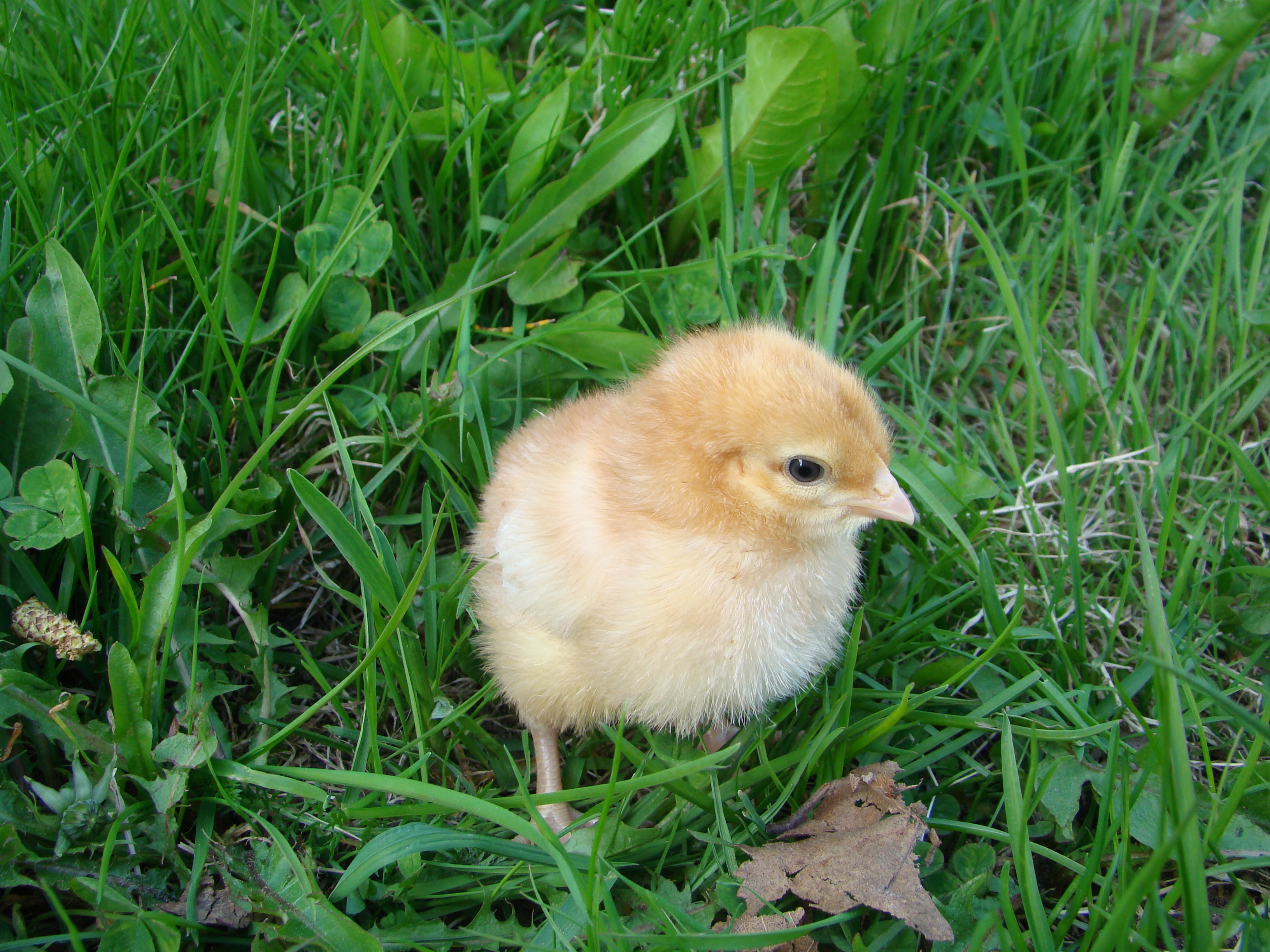
I feel like one of my newly acquired chicks. Frantic with delight and distraction—everything is new. Everything is exciting. I can’t decide where to peck next, so I flap back and forth, take running leaps, then stutter to a stop—flutter up to practice perching, then flop back to the ground (sometimes face plant) to snack some more. . . .

The problem is that sometimes you can become so accustomed to working on a deadline that you know you can sit down to work, completely uninspired, and within minutes the muse will honour your commitment to your work and suddenly the story that seemed non-existent will roar to life. “Whatever’s loudest in your head” only half applies, because you’re a pro now (or some reasonable facsimile thereof, heh heh) and you can make your head turn up the volume on whatever story you want or need it to.

The problem is that sometimes two stories are completely different from each other in every way, yet are both engaging, tempting . . .

And before you suggest working on the stories in tandem . . . I can edit any number of works at the same time, it seems. And I can work on the odd short story while I’m in the midst of a novel. I can’t (yet!) seem to get into the worlds of two of my own novels simultaneously.

The problem is—I’m indecisive in the extreme the past few months, and now I’m being a big whiner and just making excuses.

Today (my last project, a.k.a. excuse, e-mailed away) was decision day. I came up with a solution. I’d flip a coin. Seriously. I even considered tweeting “Heads or Tails?” on Twitter and going with the choice that came back first.

And then, just short of hitting “enter,” a better idea finally it came to me. One of the stories, already started, is significantly shorter than the other will be and it has a brief chapter-by-chapter outline (something I never do) that will help me refresh myself with the plot almost at a glance. It will write itself quickly and be the perfect “break” piece once I’ve finished the rough draft of the longer novel and am giving it a 4-6 week rest before putting it through edits.

Tomorrow when I perch to write I’ll silence the loudest voice in my head—the stalling, but-what-should-I-focus-on one—and say, “Relax. You’ve decided, remember?” I guess in the end, I still believe in going with my gut. It’s just my guts are messy sometimes. 😉

How about you all? Is it always simple for you to figure out your next project, or do you spend a bit of time lollygagging over the decision?

To Capture the Moon

The yellowed-ivory moon rose over the snow topped mountains in the near distance. Huge bellied and magnificent, she sat heavy in the periwinkle sky of the early spring evening, queen of all she surveyed. And I, a peasant beneath her, awed by her visage and her serene scrutiny, deserted my leaf-raking and flowerbed cleaning and ran for a camera—completely taken in: this was the night I’d capture the moon.

I fetched my camera, and . . .

Completely failed in my quest. I have seen gorgeous photographs of the moon. The people who take them are magicians. Or perhaps they too think, You call this image beautiful, breathtaking, magical? No, you should have seen the moon that night. I didn’t even come close.

I know in seeking that illusive picture of the moon, concepts (magic spells!) like aperture, ISO, and EV 1 or 2 units come into play, along with tools like telephoto lenses, tripods, and the like. I have heard that I can master them. And perhaps I will. Strive. Try.

My first pronouncement—“completely failed”—softened under her encouraging glow as the night darkened around her. I emerged instead with a lesson, applicable to my writing and so many other parts of my life. The attempt is the joy, is the success, is the purpose. The moon will never be captured fully, but she can be suggested, alluded to, conjured, imagined, dreamt. . . .

And as if to affirm that truth, I discovered that two of the twenty or so shots I took turned out . . . not bad. Though nowhere close to how beautiful the moon actually was on April 6, or how she overtook the horizon and my imagination, I hope they hint. . . .

So the aftermath of my night’s chase? Most often with words, but sometimes using picture, paint or other, I’ll keep seeking to express the beauty and mysteries that sometimes surprise us in the day or wait and appear only fleetingly at night. And most often I’ll miss the mark, not accomplish what I’m shooting for, but that’s okay. I accept the quest. I revel in it. I delight in it. And who knows? Sometimes I might come . . . close.