Did you say 51 free books? I sure did! :D

november-free-for-allIf you’re one of my Ev’s News subscribers or you’ve popped by my Facebook page recently,  you may have already heard about this giveaway, but I just had to put the offer on my website too. It’s too good to not yell about, and I’d hate for someone to miss it!
50 authors offering 51 books = no winter blahs for you, only reading treats. Get your books here, now.

I’m sure you’ll find something to tickle  your fancy. Very happy reading!

🙂 Ev

Babies of Mine

ev-and-hugh-july-2016Shortly after my daughter was born, I came across Chris De Burgh’s song, “For Rosanna”—or maybe I heard it years earlier, but it didn’t resonate with me until I had my own child. He totally nails it, I thought (weepily, I admit). My life is completely and forever changed, to the point that I have difficulty articulating the words for what the change even is, but he has done it for me. I promptly changed his “Rosanna” to my daughter’s name, and it became my favourite lullaby.


When I had my son, again the song fit so well, it was as if it had been written for him. I changed a few words when I sang, and it became his song too.
 
“This is for—, sweet [child] of mine, A song for the baby who changed my life, I’ll never forget when I saw you first, I thought that my heart would burst, With the love that I have,” sings De Burgh in the opening verse.
 
He goes on to describe watching his child sleep and expresses that he can’t believe everything he feels—and, especially, the great love that he has. Still later, he sings that as he watches her grow from “baby to child,” he shares her sense of wonder.  
 
Most poignant to me, however, was his reflection on the things his child would experience when she was older—and how deeply he wanted her to know that he would always be there for her and that she was so loved.
 
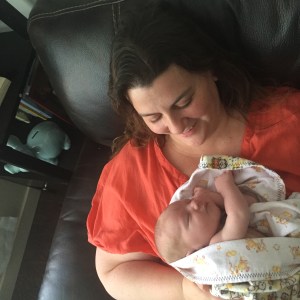
It’s a song that still has the power to make me cry because I identify so much with all its love, hope, joy, yearning, pride and awe—and tiniest hints of trepidation and worry. And it gained new meaning and refreshed poignancy recently because I became a grandma this summer!
 
My husband and I were thrilled upon hearing we were going to be grandparents, and as the nine months progressed and the big birth day grew closer and closer, our excitement grew bigger and bigger, just as quickly as our daughter’s stomach. I knew, of course, we would love little him or her. And I knew we’d be surprised by how special it was. I was even aware that we probably wouldn’t have words to fully express our joy that well.
 
But even knowing that, I was not prepared for the crazy flood of . . . you name it.
 
I think most people understand that becoming a parent is a life-changing, forever-defining (and redefining) thing. I had no idea that in so many ways so is becoming a grandparent.
 
When my daughter called me for the first time after having her little son I’d already known he was born and that everything had gone well, but somehow hearing her voice undid me. When I got off the phone, I cried and cried. I can’t really name what the emotion behind my tears was. Definitely not sadness. Something the opposite of sorrow. Joy, yes. Relief, yes. Maybe though, to say awe or a sense of surreality would be the most accurate. My first baby had a baby.
 
And then I met Sweetest Guy and . . . I was just not prepared.
 
My husband, when pressed by my daughter, described his feelings for his grandson as being like all the love he has for her (our daughter), plus this all-encompassing new love that is just for our grandson. Was that hard to follow? Exactly. Some feelings, no matter how we struggle to describe them, will always defy our abilities to explain.
 
And every time I hold my little grandson, I feel . . . awe. I see something of my beloved daughter and a lot of my much-loved son-in-law in his little features and expressions, yet at not-quite three months old, he is already uniquely himself and is even beginning to have his own sense of humor. (He finds his grandma and his giraffe hilarious, just so you know.) There is something amazing about looking into the face of someone who carries your genes and your child’s genes, who is, as De Burgh says, blood of your blood.
 
Spending time with Sweetest Guy also triggers memories of little moments with my own kids that I thought I’d forgotten, which is very special. I could literally just hold him and watch him and enjoy him for hours and hours and hours. (Don’t worry. My daughter is very assertive. She doesn’t let me drive her too crazy.)
 
And maybe, just maybe, there’s the tiniest tinge of something bitter-sweet as every aspect of loving him reminds me of how much I delighted in being a young mom with young kids—and reinforces the sometimes-fought-against truth that my season for that is over.  But the dominant feeling is an overwhelming, deep joy and gratitude. It’s a new season.
 
The chorus to Chris De Burgh’s beautiful love song says, in part, “Oh how my heart it is shining, oh how my heart it is shining through—with the love that I have.” And maybe now, as when my own children were small, that is as close as I can get to explaining how I feel. My heart is shiny. There is a new person in our world and I—honour, responsibility, great fun and huge love that is—am his grandma.


– – – – – – – – – – – – – – – – – – – – – – – – – – – – – – –

“Babies of Mine” by me, Ev Bishop, was originally published in the Terrace Standard in September 2016 as my monthly column “Just a Thought.”

Love Can Last

Photo by Yvonne Letourneau Rego

Photo by Yvonne Letourneau Rego

Originally I was going to title this “Love Can Die.” I was going to write about all the ways we destroy our romantic relationships, family bonds, and friendships through neglect, selfishness, and/or the insidious notion that the grass is greener elsewhere. I was going to talk about how, despite the fact that we have more tools, more opportunities for relationship help than ever before, we also have less resiliency, less perseverance, less hope—and we’re more fickle and more jaded—than ever before.

 
But that last word—jaded—stopped me. My brain filled with forty-plus years of memories and facts I’ve been blessed with: a marriage that just hit its twenty-five year mark (Crazy, right?), adult children who love me and seem to enjoy spending time with me, true, faithful friends . . . and I realized, no, in our day and age we are all inundated—by life experience, the media, and so many songs, stories and articles—with the knowledge that love can die, that the sincerest of promises get broken, that even the very best of intentions can fail.
 
So maybe what we need to know, to remember, to cling to in our slightly disillusioned era is that love can last. If it’s broken, it can often be fixed. If it’s weak and failing, it can often be healed. If it’s lost, it can often be found.  
 
It’s intimidating to talk about how to maintain or build love over the long haul because I’m fully aware that at least some of it comes down to luck. So please, don’t take this as advice, but as encouragement—a note about things that took me a long time to learn (and that I’m still figuring out how to practice more consistently) that have brought me a lot of joy, peace and love in my relationships with family, friends, and my husband. 
 
Don’t look for—or expect perfection—in anyone, not your spouse, not your kids, not your parents, not your friends. Not yourself.
 
Manage expectations. No one person can fulfill all your needs. Don’t hold it against someone if they can’t talk about all the things you need to talk about or don’t share your passion for XYZ. Get yourself a tribe—and allow and encourage the people in your life to build other friendships too.
 
Understand that people are the way they are for a reason—and it’s most likely not to hurt you or piss you off. It’s easy to hold things against someone, to see all their negative qualities, and the ways they possibly injured you. The remedy to bitterness is to recognize that we all have struggles. Looking at my own failings always makes me less critical of others.
 
Focus on positive qualities and quirks, not perceived flaws.   
 
Watch out for the demons of regret, unfulfilled dreams, self-loathing or unresolved issues from your past that might sneak in and tempt you to put your shit on someone else.
 
Be gentle and kind. Admit, and apologize, when you screw up, are grouchy, are hurtful (and try to do better!), and pray like crazy they extend you a lot of grace. Extend a lot of grace yourself.
 
Say what you need (people aren’t mind readers!), and insist on decent treatment and respect. We all have our lines in the sand—and they’ll be different for each individual. What I find hurtful, someone else might find totally okay, but be honest and vocal or you’ll harbor resentment—a relationship killer.
 
Be loyal. Don’t backstab or trash talk people you care about.
 
Give people room to grow and change. Don’t expect them to be mini yous. Having differences isn’t threatening; it’s what makes you interesting.
 
Have fun! Seriously, people underestimate the value of doing things just because they’re fun. Good times can make up for a lot of rough ones.
 
Love can last. Healthy relationships can endure. It, and they, may take a lot of work, at times—and you may have to confront things in yourself that you really don’t like, put in strenuous effort to better yourself, or ask—and work for—forgiveness, or, even more difficult, offer forgiveness, but nothing is more worth the effort. And thankfully, it doesn’t always feel like work!
– – – – – – – – – – – – – – – –

“Love Can Last” by me, Ev Bishop, was originally published in the Terrace Standard, August 2016 as my monthly column “Just a Thought.” It’s part of a theme I’m exploring this year–“Things I want my children (and future grandchildren) to know.” Any you’ve missed can be found here: 

1) What do you know? (Jan. 2016)

2) Kindness Matters (Feb. 2016)

3) Beauty in the details (Mar. 2016)

4) Seasons Change (Apr. 2016)

5) Every Day Is Mother’s Day (May 2016)

6) Have Heroes (June 2016)

HOOKED by Ev Bishop = 2016 RONE Award Runner Up

rone-badge-runner-up-bronze-2016-1Woot, woot! Some of you may have already heard my exciting news, but I wanted to do an “official” happy blurt, regardless. HOOKED, Book 2 in my River’s Sigh B & B series, almost won a RONE award this year, earning itself a very respectable runner up!
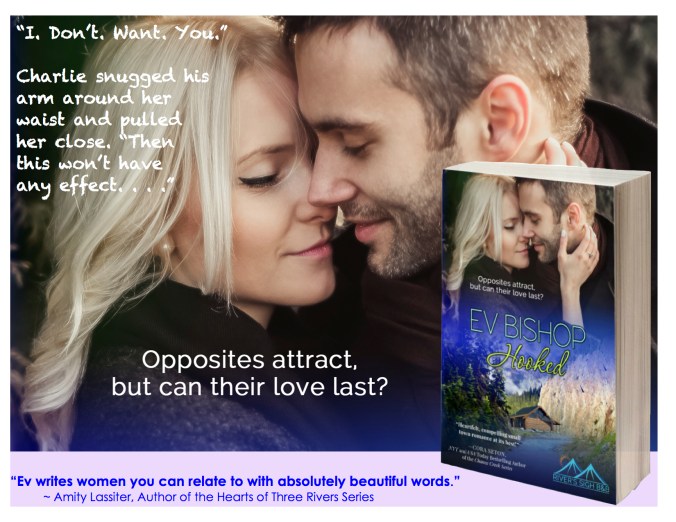
I’m incredibly honored that HOOKED placed in InD’Tale Magazine’s increasingly prodigious contest, and I’m very grateful for the encouragement, motivation, and professional development InD’Tale Magazine (and its sister conference, InD’Scribe con) provide so generously. The staff, reviewers, and organizers are a wonderful resource and benefit to authors, small publishers and readers.

It’s my hope, goal, and aim (LOL!) to take home the gorgeous crystal RONE trophy some day, but I have to say even runner up feels amazing. I also want to say a huge thank you to everyone who voted for HOOKED and got me to the final judging panel. You are awesome and I appreciate your loyal reading–and love of–my stories, very much.

Haven’t read HOOKED yet? Well, I hope you will–and that you get hooked. 😉  Check it out here! 

hooked-ad

A Wet Summer Lesson

Photo by Markus Reinhardt

Photo by Markus Reinhardt

The following ran as my July 27, 2016 Just a Thought column in the Terrace Standard. Because I’ve been distracted by wonderful things this summer (namely my new grandson 🙂 and my whopping 25th wedding anniversary), it was a reprint of something I wrote in July 2012 . . . and while the weather right now is glorious, hot, sunny and perfect, and I haven’t complained about it a bit, the words still resonate with me. I hope you like them too. Enjoy! 

– – – – – – – – – – – – – – – – – – – – –
 
I’m guilty of complaining about the weather this year.  I can’t help it—it’s been so blah and wet the past few weeks. And when the leaden sky opens and pours buckets and the cold wind kicks up, I know I’m not the only one to bellyache. I’ve heard you!  
 
A couple of events challenged my negativity.  The first involved a plastic tote of gravel. I was at friend’s house and she came up with the notion that we should craft hot pan mats out of rock and canvas like material. We’d both seen similar done with agates, shiny black stones, etc., and thought, Why not? It could turn out really cool.  
 
She got her son to get a load of gravel from the back of their property. Surveying the dusty gray rocks, we started to second-guess the genius of our inspiration.  
 
“They probably look better wet,” she said a bit dubiously.  
 
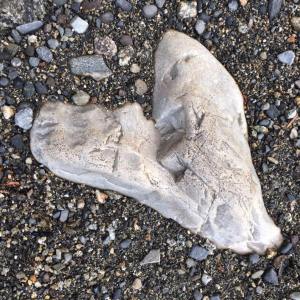
I can hardly explain how surprised I was as we washed our rock collection only to have every single blah pebble turn a brilliant colour—purple, green, coppery brown, speckled black and whites, pale peach—it was amazing.
 
Something about the extreme beauty in something so plain and easily overlooked as the gravel that lies alongside ditches really struck me. Before I could commence gluing, I had to take before and after pictures of the rocks, so I would remember the difference looking at the stones another way made. 
 
Then one evening I took a walk with one of my sisters. It was almost dry—we thought were safe. And then when it would take as long to walk back to the car as it would to finish our walk, it started to drizzle. And then pour! It was exactly like someone had turned on a shower full blast. The water soaked our hair and jackets, ran in rivers behind our ears and down our necks. We looked at each other and had to laugh. 
 
The streetlights came on and reflections of the beams—warm yellow circles—shimmered up at us from the glimmering pools of water on the black cement. The clouds were a kaleidoscope of every shade of gray, from soft and light, the colour of dove belly, to sooty almost black—as they crept and sped and turned and bumped across the sky.   
 
And then I walked another night with one of my other sisters, around 10:00 p.m.  It had rained hard all day and the sky actually seemed lighter with the approaching night than it had in the afternoon. Above the deep green wall of trees beside us, the clouds, as if to prove that the sun was really in the sky somewhere, were opalescent—silvery with deep, glowing pink edges that gradually faded out into a soft purple hue.  
 
As we oohed about how gorgeous it was, my sister laughed and said something to the effect of, “And here everybody’s been complaining about how awful it a day it was, and we were just being impatient. It’s completely beautiful.”  
 
And here’s the thing I realized, true about rainy walks, gravel-turned-glorious and many other things: often what we see and feel has little to do with what’s actually right in front of us. Scenery and situations are coloured by mood, by expectations, by past experiences, and sometimes we just need to look at the exact same things slightly differently to appreciate them.   
 
I won’t make any promises to stop lamenting the lack of sun this July, but I will try to get out, consider the present without comparing it to some other moment, and open my eyes to the beauty that’s everywhere.

Have Heroes

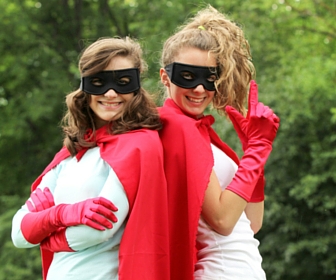
Have HeroesWhen I was very young, my brother and I used to clamor for our dad to take us to this long grassy strip beside the railway tracks in Smithers so “we” could run. What we actually wanted was for him to run, while we chased after him. We were awed by his speed and would exhaust ourselves trying and trying and trying to keep up. We thought he was literally the fastest man on earth, and told him so. He would laugh and laugh . . . and then, sort of embarrassed like, add, “I’m really, really not—and please don’t tell anybody that I am.”

His disclaimer only made us all the more convinced that he was the fastest, that he was just being modest or kind of like Clark Kent, trying to keep his super powers under wraps. And he was our hero in other, bigger, ways too.

This hero worship and pure rose-colored love applied to my mom as well. In addition to being the best cook in the known universe, she could sew anything, patch up the most gruesome injuries without a blink, and fix any toy. Plus, she was a math and science genius!

As I got older my dad’s super hero qualities—and those of my mother’s—diminished. (In fact, for a good chunk of time, they completely lost all ability to do anything remotely right or to know anything. After a few years, miraculously, they got at least some of their admirable qualities, skills and know-how back. Phew.)

But it didn’t matter that I no longer blindly worshipped them, that I realized they didn’t actually have invisible wings or magic capes, that they were, in fact, the same as me, just people trying to muddy through life the best they could. The lesson—that you can and should have people you admire, that you look to as examples of how to live and be—was set.

While I don’t think we should idolize anyone to the point that if they fall off their pedestal it completely shatters our vision of ourselves, our hope for our lives, or our world view, I do believe, regardless of our age, it’s nice—and incredibly beneficial—to have heroes.

Identifying people who are doing what we want to do, living how we desire to live, or who embody morals, character, and personality traits that we would like to have, then watching them and practicing their methods and approaches, is a great way to learn how to maneuver life yourself. Sometimes, or regarding some specific things, those people might be family members, but other times, we may need to focus beyond our immediate roots.

Over the years, I’ve looked to a myriad of people for guidance, affirmation and inspiration—as a mother, a homemaker, a writer, in my career, but also just as a traveller on the road of life. It can be a treacherous, terrifying road with bad slippery spots and tough terrain at times. Looking for clues on how to manage and thrive from those with more experience just makes good sense.

We should all seek heroes—unique to our personal bents and aspirations, hopes and dreams. And we should never worry about whether anyone else is similarly inspired by our notion of what makes someone “heroic.” It’s a uniquely personal thing. And should our heroes need to change their outfit, fly with another cape or be supplanted or joined by someone else because we’ve grown all we can under their influence—well, we should feel no guilt in looking to someone new. Heroes understand.

– – – – – – – – – – – – – – – –

“Have Heroes” by me, Ev Bishop, was originally published in the Terrace Standard, June 2016 as my monthly column “Just a Thought.” It’s part of a theme I’m exploring this year–“Things I want my children (and future grandchildren) to know.” Any you’ve missed can be found here: 

1) What do you know? (Jan. 2016)
2) Kindness Matters (Feb. 2016)
3) Beauty in the details (Mar. 2016)
4) Seasons Change (Apr. 2016)
5) Every Day Is Mother’s Day (May 2016)


Huge KOBO book sale!

Calling KOBO readers!

Hello and happy (sunny!) Thursday greetings,

I just wanted to pop up a quick note for all KOBO readers. Kobo’s having a huge sale to celebrate the first week of summer. Hooray! For just a few days, a huge percentage of their stock is 50% off, including each of my River’s Sigh B & B novels and Bigger Things. Load your summer reads now–and please spread the word. Click this link to get shopping! 🙂

Wishing you a wonderful weekend (Come on, let me have it — it’s almost the weekend, after all) and, of course, happy reading!

~Ev


Every Day Is Mother’s Day

Photo by Jinterwas on Flickr. Click the photo to visit the artist's page.

Photo by Jinterwas on Flickr. Click to visit the artist’s page.

I was always fascinated by my mom’s purse, a treasure trove of comfort and necessity. She had a preference for large leather handbags. The size seldom varied, nor the contents, nor the lovely minty scent.

Perusing the bag was a favourite treat. It always contained, at minimum:


  • At least one tube of some bright berry-red lipstick, worn to an extremely sharp edge—a fact that still fascinates me as I always grind mine to a smooth, flat surface. My mom’s way seemed much more sophisticated!
  • Rolls of chalk-white, green centered mints. (Hence the calming aroma.)
  • Mini packages of tissue papers
  • Individually wrapped lemony wet wipes
  • Cough candies (hideously strong ones)
  • Assorted pens
  • A spiral notepad
  • Band-Aids (multiple sizes)
  • Aspirin (in a tiny white, yellow and brown tin with a sliding lid)
  • Tampons
  • A Hot Wheels car or two

To me, her purse was the epitome of femininity and motherhood. I considered it glamorous (even though it was usually squat and grey) and practical, and I vowed that if I was ever a mother, I would have just as fascinating and soothing a purse to help me attend to my needs, the needs of my children and those of any other random kids who happened to fall down in my proximity, needed to jot a note, or just had really bad breath.

And then I had kids.

My failure to ever carry a bag remotely as well-stocked as my mom’s, let alone one with an entrancing minty scent, symbolizes the theme of most lessons I learned about motherhood: things rarely go as imagined or planned, and often we’re not the moms we envisioned being—for both better and worse.

And it was the kindest instance of that repeated lesson. We’ve all done it. Vowed we’d never do such and such like our mother. Promised we’d never say X, Y, Z, or do . . . blah, blah, blah. Hopefully, we can also identify tangible ways our mothers showed their love, see characteristics we want to emulate.

It wasn’t until I had my children that I realized how young you are (regardless of your age!) when you have kids and become responsible for someone else, how inept and ill equipped for the task you feel. It’s not just their physical wellbeing and nourishing you need to worry about—in fact, that’s the least of it. You have a tender soul to raise, who will feel each one of your mistakes—and each of life’s random happenings, which you are completely powerless against—so keenly it makes you bleed inside. You will, like it or not, shape the adult another person grows to be. There is so much love and awe and fun—and yet so much absolute terror and mind-paralyzing insecurity.

Kids view the world through their mother’s eyes, her introduction to it. And all the time I was young, I thought there was some magic adult age (that somehow coincided with a child bursting forth from your uterus) where you Know (capital K) all things—thus any mistakes, follies, or perceived injuries had to be intentional.

If you’re a parent, you’re shaking your head because you know full well that the only thing that “bursts forth” with your firstborn is a powerful new awareness: that forever you will love someone more than yourself and never be more powerless, or at least feel more powerless, to be all the things you want to be for them, to protect them how you need to, to give them all they’ll require to endure and thrive—and you have to do it from whatever place you’re at in your life at whatever moment, with all the lack of answers, sketchy finances, unresolved gunk, relationship problems, grief, illness, etc., etc.

Mothering helped me understand my mom better and showed me that forgiving her for any perceived wrongs was critical to my emotional growth and to choosing how I wanted to live and be and parent. Focusing on her strengths and successes, the things she taught me and how she’d inspired me, allowed me to take personal responsibility and grow into someone separate and distinct from her—yet to feel an increasing connection to her—exactly, I believe, as she always wanted for me.

– – – – – – – – – – – – – – – – – – – – – – – – – – – – – – –

Every Day Is Mother’s Day” by me, Ev Bishop, was originally published in the Terrace Standard, May 25, 2016 as my monthly column “Just a Thought.” It’s part of a theme I’m exploring this year–“Things I want my children (and future grandchildren) to know.” Missed the first four? Find them here:

1) What do you know? (Jan. 2016)
2) Kindness Matters (Feb. 2016)
3) Beauty in the details (Mar. 2016)
4) Seasons Change (Apr. 2016)

Newsy tidbits, plus an invitation

Okay, so it’s mid-June and I keep thinking May’s just wrapping up, LOL. Oh well, at least it’s been mostly good things keeping me busy. 🙂 In fact, I had wonderful news in May, three times over!

One of my poems (“Irregular Shapes”) received an honourable mention in the Shuswap Association of Writers’ 2016 Askew’s Foods’ Word on the Lake Writing Contest (Poetry category), and my essay “Birthing Relationships” won second place in the same contest (but in the Non-fiction category). Woot, woot! I’m so grateful to all the industrious, art-minded folk who support and nurture literary arts.

I also found out that my novel HOOKED is a 2016 RONE finalist. I’ll find out in October if it’s the grand winner, but even making the final cut has me dancing around my office with honor and delight! 🙂

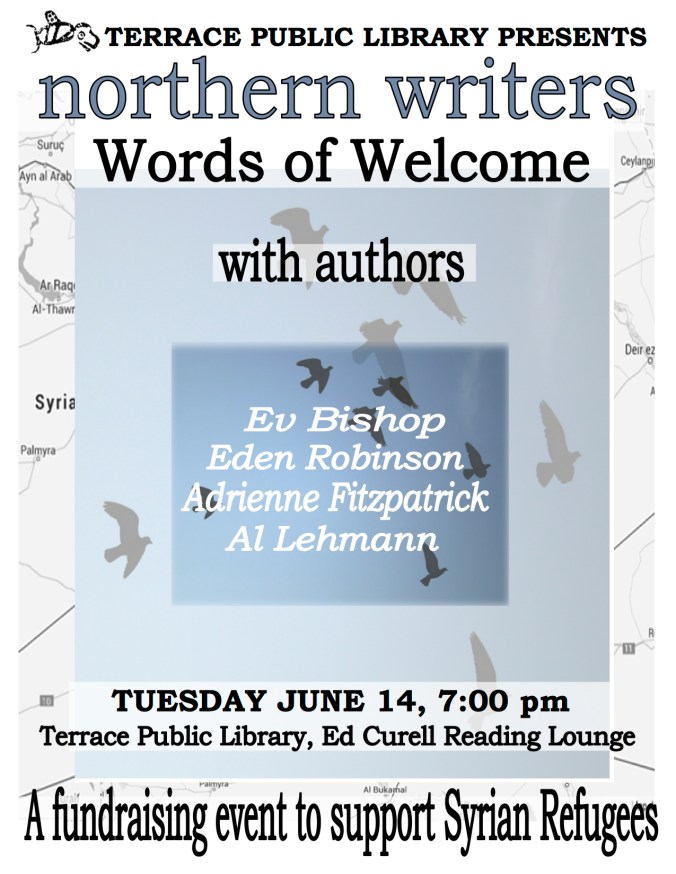
Last but not least, if you live in the Terrace area and fancy an evening of reading and chat for a good cause, I urge you to come out to “Words of Welcome,” a group reading/fundraising event, at the Terrace Public Library tomorrow night (7:00 p.m., Tuesday, June 14, 2016).

Eden Robinson, Adrienne Fitzpatrick, Al Lehmann and I will each be reading a short excerpt or two from a published work or work-in-progress, and will be on hand for a question and answer period. Entry is by donation, with all proceeds going to the new families moving into Terrace from Syria. It promises to be an entertaining, thought-provoking night–and it’s for an excellent cause. Please come!

Words of Welcome_Syrian Refugee Fundraiser Reading

Seasons Change

DSC04398In a memory so clear I can practically taste the dust I kicked up, inhale the sweet scent of cottonwood pollen, and feel the heat of the packed earth—and the occasional sharp bite of gravel—against the winter-tender soles of my feet, a moment from a school day over thirty years ago has always stayed with me.

I was in grade five, the final bell had rung and we’d been dismissed. I’d been held back after class for something, however, and by the time I was outside (feeling hard done by and blue) and ready to walk home, there wasn’t another kid in sight. It had been cold and wet when I left for school that morning, so I was wearing boots and a heavy jacket—but it was late March or early April, meaning the weather could go from snow to beach-ready seemingly overnight, or in this case, over the seven or so hours I’d been inside. As I left the school grounds and started my trek past the then neglected, vacant lots, something pulled me from my sadness: the realization that it was warm.

I peeled off my coat. Stopped to admire dandelions. Noticed buds on a bush that had been tightly closed earlier now revealed tiny green leaves. The birds were noisy. The air was delicious. My feet sweated. I considered the well-worn dirt path snaking through the unkempt bright green grass and made a decision. Tying my coat sleeves around my waist, I bent down, tugged off my boots, ripped off my socks and stuffed them inside said boots. Then gripping my footwear in one hand, feeling weirdly proud, I walked the rest of the way home barefoot, sure that each passing car was envious of me and my unconfined toes.

That evening, when my mom asked how my day was, I answered, “Great.” And I wasn’t lying or forgetting. It had just . . . changed.

Over the years, that memory, so tiny and seemingly insignificant, grew to have . . . significance. It was, in my young brain, vivid evidence that moods and circumstances—and nature/life itself—changes. Of course, in terms of what life would throw at me, what I’d go on to endure, a bad day in elementary school was a walk in the park, but it remained a tangible encouragement, regardless.

For almost as far back as I can remember, I’ve been deeply affected by the seasons. I’m at my height of happiness and peace (I bloom so to speak!) in the hottest heat of summer. I turn to inward things, literally and metaphorically, in autumn as everything around us dies or settles into dormancy. While I’m not unappreciative of the beauty of snow and ice, winter is my hardest season. I feel a bit frozen too, and if I’m going to have gloomy thoughts, they’ll hit hardest in November and then again in January and February.

Spring, however, ahhh—although not my favourite season (because remember summer, guys, summer!)—always feels like a gift because it reminds me of deep truths I intuited all those years ago walking home from school: Hard times (winters) eventually end and easier times come again. Things that appear dead can rejuvenate, come back to life, bigger, stronger, and more resilient than ever. Root systems, the supports for growth and health, are often invisible, yet they exist.

There have been times in my life—and unfortunately, there will be more, I’m sure—when it seems like a particularly difficult season (grief, heartbreak, loneliness, financial hardship, a crisis of faith, you name it . . .) will never end. Yet just like spring always eventually comes, those heavy, hard to deal with things inevitably lighten.

Spending time in nature (throughout the year and every kind of weather) helps me take heart and remember: seasons change and so do we.

– – – – – – – – – – – – – – – –
“Seasons Change” by me, Ev Bishop, was originally published in the Terrace Standard, April 27, 2016 as my monthly column “Just a Thought.” It’s part of a theme I’m exploring this year–“Things I want my children (and future grandchildren) to know”–and feels very apropos as I’ve been spending every minute I can outside in my garden, watching things grow. 🙂 Missed the first three? Find them here:

1) What do you know? (Jan. 2016)
2) Kindness Matters (Feb. 2016)
3) Beauty in the details (Mar. 2016)