A Note From Mark Twain

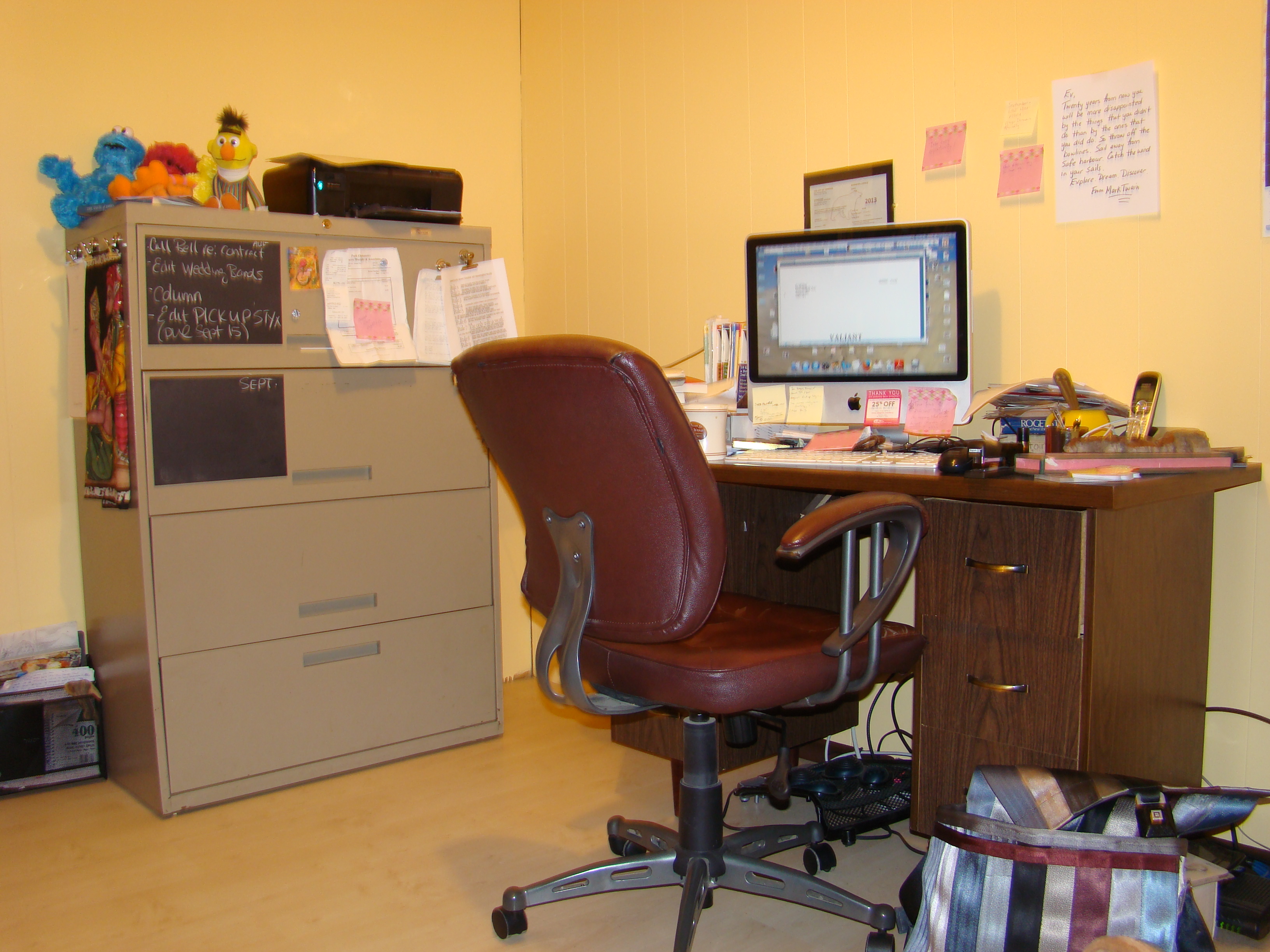
In my head . . . er, office!

In my head . . . er, office!

The other day, in a bit of a funk, I turned to my journal, figuring some random ranting might soothe my itchy impatience, unrest, and sluggishness. This annoying, conflicting state hits me every so often: I want something to happen, to be accomplished, to be different—but I feel too lazy to work or do much of anything.    

Do you relate? Have goals and dreams that you don’t always work toward, that you beat yourself up for not accomplishing, even while you fritter time away time on stupid stuff? (Facebook games, perhaps? Argh, the time suckage!)

Anyway, I opened my spiral bound notebook, a tattered, sadly neglected thing this summer, and what had I scrawled as the last entry?

Not a flowing stream-of-consciousness ramble. Not a to-do list (one of my favourite past-times—creating, not necessarily fulfilling, to-do lists!). Not an idea for a story or an informal essay about something I was thinking on . . .

A quote. And what a quote! So weirdly timely, as if back on June 20th, I knew the glorious sun would leave in mid-August, fall would descend early and heavy with rain . . . and I would be in need of something inspiring, encouraging, motivating.

Twenty years from now you will be more disappointed by the things that you didn’t do than by the ones that you did do. So throw off the bowlines. Sail away from the safe harbour. Catch the wind in your sails. Explore. Dream. Discover. ~ Mark Twain  

I rewrote the words to myself (Ev, twenty years from now . . . ), signed the letter (From, Mark Twain), then stuck it on my wall above my monitor. I smelled salt water, felt the breeze—and thought, Ah, he nailed the cause of my malaise—exactly.

I’m a bit of a psycho about things I’m passionate about, as you may or may not have deduced over the years, but passions go awry if you don’t put your time and heart into them. They don’t leave you altogether; they just nag at your subconscious, causing angst, making you restless until you get back to them.

Busy the past year (with things that, to be fair to myself, legitimately demanded time, burned physical and mental energy, and took an emotional toll), I let myself fall into the trap of putting off things that I know I need to do, desperately want to do, and derive a huge sense of satisfaction and well-being from.   

And for a while that’s fine. Is understandable. Is life. But after a time . . . Well, the conviction I should be working on something but instead I’m playing Bubble Pop Battle ‘til my hand cramp up kind of drives me around the bend.  

So what am I doing about Twain’s friendly warning? I’m remembering that twenty years will fly by—and that at sixty (and at seventy and at eighty—and today!) I want to be able to say that I gave my goals my best shot, that maybe my progress occurred in fits and spurts, but I was steady. I took risks. I tried.   

Years ago, when my children were small, Thomas Moore’s famous line, “The best of all ways to lengthen our days is to steal a few hours from the night,” was my mantra. Later, when I was teaching, I wrote early mornings. And after that, for a few luxurious years, I wrote during regular workday hours.   

And now? In light of my letter from Mark?  I’m back to early mornings. It’s not natural for me. At all. But I’m finding the quiet hours very lovely. And very productive. As with late nights, the world is different when everyone else is asleep. Dreams are closer to consciousness. More seems possible.   

Perhaps pretending Mark Twain penned you a personal note isn’t something you’d find especially motivating, but his message is pertinent for us all.

Time moves quickly. What is it you should be doing now? What trips are you planning? What tasks need tackling, or classes should you register for? Or do you need to steer into something entirely new? So go on, do it. Sail away from safe harbour  . . . Explore. Dream. Discover. 

_ _ _ _ _ _ _ _ _ _ _ _ _ _ _

“A Note From Mark Twain” by me, Ev Bishop, was originally published in the Terrace Standard, August 28, 2013 as my monthly column “Just a Thought.”

Beach Reads

I read voraciously all year long and every season has special elements that make me think, at the time, Ah, this is really it: the absolute best time of the year to read. And summer is no different. I adore sprawling out on a blanket (half shade/half not) on the hot sand at Lakelse, Ice-tea close at hand, book cracked. I revel in late night reading where the light is fading, fading, fading but still not gone. My senses are thrilled by the stormy, windy, rainy weirdness of hot summer nights, where the uneasy weather adds to the story . . .

Yes, beach reads. Soggy summer savers. Sunburn salve. Bug bite balm. Sun-kissed escapes and escapades. Warm weather wonders. There’s a bunch of corny ways I refer to the books I read in the summer, and I thought it was a global thing, that everyone loved a summer read—but apparently, no. I was shocked (and horrified!) to learn that July and August are the poorest months of the year in terms of book sales, print and electronic. But whether you buy, borrow, or use summer, as I do, to catch up on my ever-present and overflowing to-be-read stack, here are a few books I highly recommend.

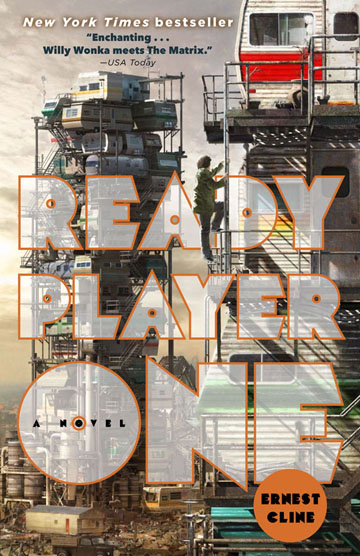
Ready Player One by Ernest ClinelReady Player One by Ernest Cline: totally awesome story, man! (Archaic 80s praise used intentionally because while most anyone over 13 will enjoy this story, people who were teens or 20-somethings in the 80s will have special moments of extreme-geek pleasure.) USA Today called it “Enchanting . . . Willy Wonka meets The Matrix,” and while I usually don’t like those types of descriptions, in this case, the comment nailed it. Ready Player One is pure zany fun and adventure. I hit page 10 and realized a huge smile had permanently taken over my face—a testimony to how wildly entertaining the story is, considering it’s a dystopia novel based on earth in 2044 and the author’s vision of our future world is an obvious trajectory of our society’s current issues and problems.

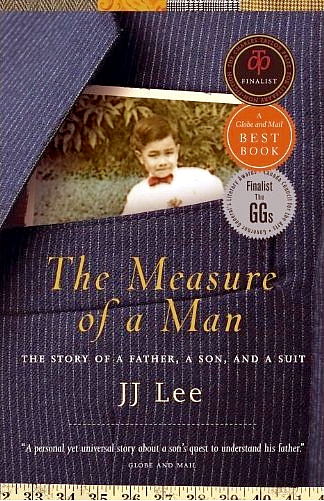
The Measure of a Man by JJ Leetumblr_static_measure_pbIn The Measure of a Man: The Story of a Father, a Son, and a Suit by JJ Lee, the basic premise is, “Chinese man with an abusive father inherits a dated navy suit of his father’s after his dad dies, and sets about tailoring it to something he can wear—serving as a metaphor for how he searches to reconcile himself to his past,” but the book is really about so much more. Anyone who has ever had a parent (so I guess that’s all of us) will find something to identify with in Lee’s quest to come to terms with hard aspects of his childhood and to understand and make peace with his father. It also, because of the people who make up the story, sheds light on at least some Chinese people’s immigration experience—which was very interesting, though sometimes bitterly sad (for me) reading.

There is a lot of pain in Lee’s personal experience, but he’s a wise, inspiring soul—and very witty and dry. And he has a lot of compassion. The latter, I think, is what spoke to me the most. Even when he’s describing his father at his worst, there’s a sympathy that really touched/inspired me.

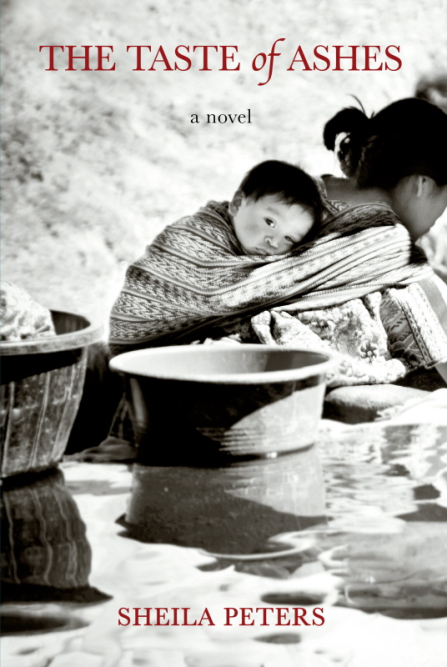
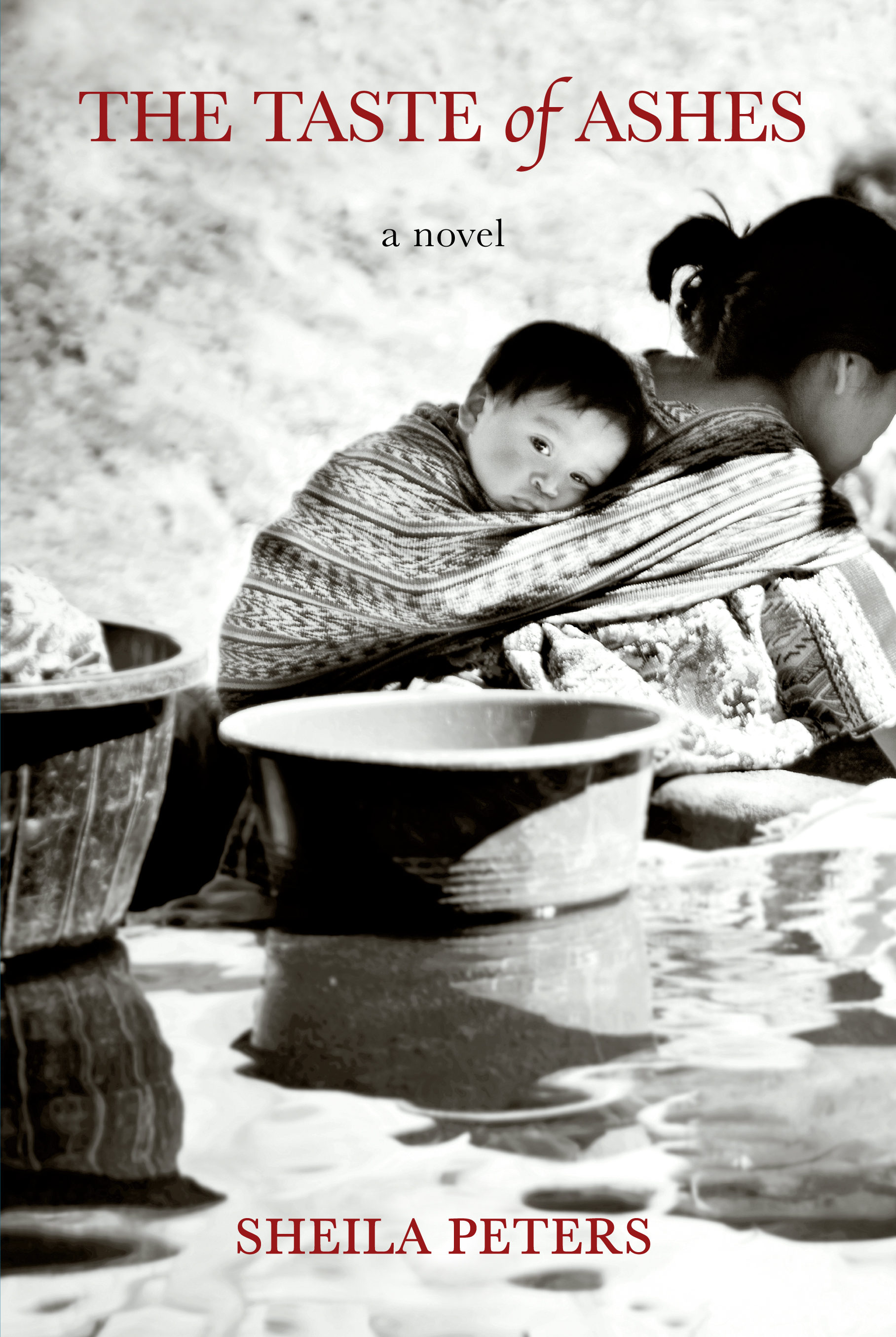
Taste of Ashes by Sheila Peters-of-asheslow-res-colour1The Taste of Ashes by Sheila Peters reads more like non-fiction about actual living, breathing individuals and literally true events, than well-researched fiction that’s “merely” emotionally true. I enjoyed it—and was challenged by it—immensely. The story’s written in a braided narrative, with three main point-of-view characters: Isabel Lee, one-time wild child, now recovering alcoholic and fodder for the small town rumour mill, Father Álvaro Ruiz, a priest seeking respite in Canada after enduring mind, body and spirit breaking torture in Guatemala, and Janna—Isabel and Álvaro’s daughter, born out of an intense affair the first time Álvaro was in Canada as a young Oblate priest—a child Álvaro knows nothing about. I couldn’t put the book down—though at times, out of stress, outrage and empathy, I wanted to throw it across the room.

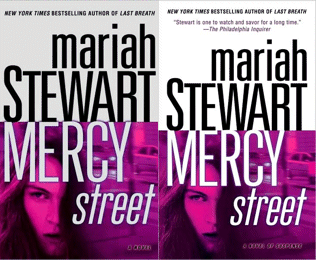
Mercy Street by Mariah Stewarthc_pbFor crime and series lovers (I’m taking it for granted that you’ve already picked up Louise Penny, starting with Still Life), I suggest Mariah Stewart’s Mercy series about an independent private investigator agency that deals with cold missing person cases. Fast-paced and super readable, I like her growing cast of characters a lot.

Wherever this summer takes you, I hope your adventures involve books. So good for the mind and the soul. And so fun! Happy sunning—and reading!

_ _ _ _ _ _ _ _ _ _ _ _ _ _ _

“Beach Reads” by me, Ev Bishop, was originally published in the Terrace Standard, July 31, 2013 as my monthly column “Just a Thought.”

Book Review – The Taste of Ashes by Sheila Peters

Taste of Ashes The Taste of Ashes by Sheila Peters reads more like non-fiction about actual living, breathing individuals and literally true events, than well-researched fiction that’s “merely” emotionally true. By praising it or raving about how much I enjoyed it, I feel I’m making light of real people’s very difficult, hard circumstances. Likewise, if I criticize any part, I feel I’m somehow slamming real people—and how dare I do that?

But I did enjoy it. Identified with it. Laughed out loud in places. The story’s written in a braided narrative, with three main point-of-view characters: Isabel Lee, one-time wild child, now recovering alcoholic and fodder for the small town rumour mill, Father Álvaro Ruiz, a priest seeking respite in Canada after enduring mind, body and spirit breaking torture in Guatemala, and Janna—Isabel and Álvaro’s daughter, born out of an intense affair the first time Álvaro was in Canada as a young Oblate priest—a child Álvaro knows nothing about. Once their voices were established and I knew who was who, I could hardly put the book down—though at times, out of stress, outrage and empathy, I wanted to throw it across the room.

Peters is incredibly skilled at showing the many-layered ways we hurt the people we love unintentionally (through ignorance and indifference—or just misunderstanding what they actually need from us)—and worse, the ways some people intentionally set out to damage and destroy others. She’s equally adept, however, at showing that healing also exists (if at a price), that love (in the furthest thing from a mushy, romantic sense of the word) endures, and grace—in sharp splinters of pain and light—can eventually pierce and change even the bleakest reality. She also shows and celebrates the power of beauty and nature.

Disturbing, challenging content adds depth to the pure pleasure of a well told, absorbing story and provokes thought. Like Isabel, I have lived in northern BC my whole life (I was born in Smithers and actually lived on Railway Avenue for most of my early childhood—the same street Isabel lives on), and any pain and personal hardship I’ve experienced has been on a small town scale. I don’t fear authorities. I have the luxury of “rights.” Torture at the hands of the government (shameful for me to admit) is the stuff of movie plots or awful newscast footage. I am moved and horrified by it, but in the detached way of one who is safe from such things. To explore the darkness and seeming randomness of that type of evil was very difficult and, I think, beneficial (though even that word—beneficial—reeks of privilege). I was shamed by my insulated safety, and by my lack of knowledge about South America, particularly Guatemala.

As all the best novels do, the ones that are read for generations because of the glimpse they provide into specific times and histories, The Taste of Ashes broadened my view of our world, and opened my eyes to aspects of human experience that shouldn’t be ignored.

I was driving to work in May, listening to the radio, and CBC happened to be interviewing a Forensic investigator about the trial of Guatemalan general Efrain Rios Montt (found guilty of genocide and crimes against humanity, he was sentenced to 80 years in jail—a historic, and long overdue, achievement for the people of Guatemala), and I started to shake a bit. Not only did I recognize the name, I had personal reaction to the type of atrocities he was directly responsible for.

The Taste of Ashes can simply be read as an interesting story of a passionate, illicit love affair, its fallout and the subsequent lives of those involved, but for me it’s more—the type of tale that makes me consider the kind of person I am, the sort of life I am privileged to live—and what, if any, responsibilities come with that privilege.

Peters’ beautiful, strong writing and vivid, put-you-there descriptions made it easy to forgive the (very few) instances where I stumbled over a slightly awkward phrase or transition into a different point-of-view or time period that could have been smoother.

My only real “complaint” about the book is not about the story at all; it’s about its cover. While I know one can’t (or shouldn’t!) judge a book by the cover, I’m confused by its plain garb. I don’t see how the sedate, black and white photo of a babe in a blanket-sling on his faceless mother’s back fits specifically to the story or speaks to its themes. Nothing hints of the exposure (and exposé) the story provides of northern BC living. Nothing shows of the complexity of the cross-cultural, cross-generational relationships it delves into.

Don’t let the slightly boring cover put you off. The Taste of Ashes is well worth your investment of time and money. If you give it a go, let me know. I’d love to hear your thoughts on it.

North Words Creative Writers Retreat

North Words Creative Writers 2013 Retreat is running August 10 – 11 in Terrace, BC this year. As ever, it promises to be an inspiring, motivating time, filled with craft discussion and writing exercises, and I was thrilled to be asked to be a guest presenter. Maybe I’ll see you there? I look forward to it!

p.s. If you have any questions about the event, I’ll either answer them for you or find someone who can. 🙂

NorthWords Adult Poster 2013

Return to sender . . .

"Returned Manuscript" Photo by Ev Bishop

“Returned Manuscript” Photo by Ev Bishop

My recent weeks have been full of emptying—first one house, then another. As I sorted through closets and cupboards, some of which, honestly, that hadn’t been gone through in 20 odd years, quite a few items gave me pause. Why on earth had he (my dad) kept that? Or, conversely, at my old house, why on earth did I hold onto that?

One such item, tucked away in the back of a cupboard above my bedroom closet, was a sealed box. A manuscript box. Marked “Requested Material.” Besmirched with a black X through the intended recipient’s address and a sticker instructing you to turn the box over.

Doing as bidden, another sticker greets you, one with five options: Insufficient address, Attempted not known (whatever that means!), No such number/street, Not deliverable as addressed – unable to forward, and Other. “Other” is selected with another X and a red, slightly smeary stamped imprint shouts “Unclaimed.”

More injuriously, another stamped mark says 1st Notice, 2nd Notice, Return—and there are handwritten month and day notes beside category.

I remembered, only upon seeing the box again, the initial request for the full manuscript—how excited I’d been.

I also remembered how disappointed, and irritated, I’d been when it came back. I carefully follow all submission guidelines. In this instance, I’d spoken with the agent in person, received the request to submit in person, been given the address to send to in her handwriting.

I didn’t send the parcel priority post, or in some other manner that requires a signature or a special trip into a postal outlet for pick up. It should’ve been delivered right to their office . . . so maybe they don’t have a big enough mailbox for manuscript boxes? (If that’s the case, how bizarre!) Or maybe she’d never really wanted to consider my novel in the first place? (Ouch, but please, I’d rather she’d just said so!)

I suspect the reality is nothing like any of my above suppositions. It’s just something that occasionally happens with mail. And when you’re busy, and the object you’re receiving notices about is off your radar, you don’t get around to picking it up. Nothing personal. No big deal.

But what is a big deal: Why didn’t I follow up, or resend it, or . . . do something? Why did I tuck it away, out of sight, out of mind . . . Imagine if I didn’t move for another 20 years or more, what a find it would be then!

I haven’t decided what to do with the unopened box. But I am taking it to heart, as it strikes me as a powerful (if painful!) message about my writing in general.

This novel, packaged up with such care, only to be stuck away, hidden from all, is symbolic of what I do with a lot of my writing.

I love to write (as I think any of you who read my blog know!); I don’t love the submission process. I would like to share my stories, perhaps connect with someone out there, make them laugh, or cry or just . . . relate—but that desire is always a bit peripheral to the actual act of writing.

The result of this . . . laziness, fear, slight disinterest, whatever . . . is that I have many stories and quite a few novels that have yet to see the light of day.

I don’t want to become one of those writers for whom publishing is the primary goal and content is secondary—but I also know that if I don’t start to put out a body of work fairly soon, my years to be able to do so will diminish, my chance to share my stories will shrink, and my hope to someday support myself with my words will become a more and more unlikely daydream.

And so, for now at least, the box sits on the floor by my desk, in a terribly inconvenient spot, where I keep tripping over it—a constant reminder that I need to be bolder, to more actively seek to share my words (and worlds!) with others. Wish me luck!

And tell me, what would you do with the unopened manuscript box?

Circles

So, after fourteen years or so where we are now, we’re moving. The house we bought used to be my dad’s—well, actually, my whole family’s. And they say you can’t go home again!

My new office is my old bedroom. Bizarre. And as I pulled out its carpet and built-in closet, then proceeded to paint the room a deep golden yellow called Bengalese Cream, I thought about circles—ones I want to continue and bring back to full strength (the gardens and flowerbeds, the yard!), and ones I want to break entirely, once and for all (for example, a genetic propensity for . . . collecting).

Memories crouch in every corner and sit on every shelf in my new-old house, and as in any life, some are wonderful . . . others not so much.

My little nephew visited one day while I was emptying out the kitchen, and found a smiley-faced toy carrot on a coffee table in the living room. “Hey, I remember this!” he exclaimed with delight—then his tone grew suspicious. “Wait, you’re not throwing it away are you?”

I assured him that no, I wasn’t throwing it away. It was a keeper. And it is. I think, literally, every child and grandchild of Simon and Susanne Higginson has chewed on that rubbery, squeaking toy. It’s practically an institution.

But I am recycling, gifting, selling, or scrap-yarding almost everything else. I have my own stuff, literally and metaphorically, to put into the house now.

At first I felt bad clearing things out, but time moves on and life constantly changes, regardless of the physical items we cling on to, trying to pretend nothing’s different. The task then is to carefully choose a few things that have special significance and pass on everything else to people who can use it better than you. Or that’s my aim anyway.

An antique doughboy in the entrance way will take its place in the living room once more. How can it not? Every time I see it, my sister’s a laughing toddler again, magazines strewn about her, waving, wildly proud, from the compartment she’s standing in.

A wardrobe from the 1800s reminds me of times spent in antique shops and second-hand stores with my mom.

A child-sized workbench, handmade by my dad, will remain in the garage. I can’t wait to outfit it with new tools (The labels for what should hang where are still there!) and restock it with miscellaneous lengths of wood for visiting kids to create with.

I’ve found a number of things we’d all thought lost forever, most notably a whole collection of pictures of one of my brothers. They’d been carefully pilfered out of the collection and mounted on poster board for his wedding. We all just forgot. It was profoundly sweet to look at this lifetime of childhood photos, chosen and arranged by my mom’s hand. You can feel the love—and the fun—she had in putting it together.

Other discoveries are as surprising and painful as a slip of a knife. A card from my husband’s mom (now deceased) to my mom when she was dying. Old letters from my parents to each other when they were fighting. Syringes, long outdated prescriptions, and other paraphernalia related to disease.

I wonder sometimes if I’m up to the task of taking on my family home, with all that concept entails—and while the verdict’s not in (It’s sort of a multi-year project), so far I’m pleasantly surprised and get a little more excited, a little more confident, about our decision every day.

The work is cathartic. I feel my parents smile at me occasionally. My mom shakes her head. “You’re not really going to keep that old thing are you, Ev?” My dad’s voice booms as I heft junk down the stairs: “Yep, you’ve always been a big strong girl.” (You can just imagine how I loved hearing that as a teen!) And in the kitchen, memories of my stepmom’s meals and baked treats inspire daydreams about future family events at the home I’ve circled back to . . .

_ _ _ _ _ _ _ _ _ _ _ _ _ _ _

“Circles” by me, Ev Bishop, was originally published in the Terrace Standard, June 26, 2013 as my monthly column “Just a Thought.”

Driving Thoughts

"Driving Thoughts" Photo by Ev Bishop

“Driving Thoughts” Photo by Ev Bishop

I was driving along today, thinking on this and that, but mostly just enjoying the familiar jaunt from the airport into town, soaking in the sunshine, admiring the gorgeous light and the crazy, brilliant—numerous!— varying shades of green that epitomize spring time in Terrace.

A vehicle behind me approached too fast, started tailgating me on the hill. I hate that feeling—of being pressured on the road (and I was doing the speed limit, maybe even riding a km or two over). A specific thought jumped into my head: Just keep your eyes on where you want to go.

I can sometimes be a bit of a nervous driver. I’m a good driver, and I love to drive—but I never feel invincible anymore. My sense of mortality kicked in about the same time I had children. I became aware (God forbid, please) that they could die young—and so could I. But I digress. As I said, I love to drive. I just, sometimes, am too aware of how many pounds my car weighs as it hurtles itself along the highway. And I’m too conscious of other drivers who are not as conscious of their responsibility and the fact that they too are propelling thousands of pounds of steel in other people’s direction.

I’m also, at times, overly cognisant of the surface of the road—worn ridges that shouldn’t be there. Pits and grooves—sink holes. Worse: angles that aren’t conducive to hugging you to the curve.

Someone once told me that the airport hill is such a road—that its angle is wrong and you’re slightly more prone to going off the road there because of it. I’m occasionally plagued by that fact—or fiction—especially when there’s an idiot behind me.

When my nerves shift into overdrive, however, I recall the sage line I mentioned above—I think it was given by my husband, but don’t tell him I credited him with it. Keep your eyes on where you want to go. Don’t panic.

It’s good advice for nervous drivers, novice drivers, and for people learning to ride bikes. You will over correct and zig and zag on the road until you learn to focus ahead of you, not on the nose of your car. And you’ll wibble and wobble, won’t be able to balance, will fall off your bike if you don’t learn to look ahead at where you want to go instead of staring down at where you are. (How I wish I’d had my husband around when I was eight or so and learning to ride a bike!)

Keep your eyes on where you want to go. Calming, practical advice for drivers and wannabe bicyclists, yes—but also good advice for life.

I’m a bit of a nervous liver (as in one who lives, not the organ responsible for aiding digestion, making proteins, and getting rid of toxins!). Not always, but sometimes, I get hung up in the details of where I am in the moment, the crisis of the instance, the busyness of the immediate.

Whether it’s writing or other work related goals, relationship desires, financial plans, or personal improvement endeavours, I can get mired up in where I’ve been or where I seem to be stuck. It’s good to remember that by looking forward, we move forward—and often just by embracing that truth, anxiety eases.

It was a beautiful drive—vibrantly green, with air so fresh and sweet as it rushed in through the open window that I grinned like mad just because life is good. I drove, and I thought, and I kept my eyes on where I wanted to go.

_ _ _ _ _ _ _ _ _ _ _ _ _ _ _

“Driving Thoughts” by me, Ev Bishop, was originally published in the Terrace Standard, May 29, 2013 as my monthly column “Just a Thought.”

On Journaling

Photo by Puuikibeach

Photo by Puuikibeach

My daughter got me a snazzy new journal recently. Its designers cleverly titled it “My Dysfunctions,” and its funky yellow cover carries further explanation (less we be unable to figure out what it’s for!): “A journal for chronicling my immeasurably fascinating dysfunctions, neuroses, emotions, inner children, moments of shame and doubt, projection, self-loathing, misanthropy, and completely normal insanity, because the only difference between me and the rest of the population is that I acknowledge how crazy I am and they’re all in mind-numbing denial.” Hilarious and so apt!

While I’ve always wanted to create the kind of journals or diaries you can pass on to loved ones after you die (You know the kind I mean—leather bound beauties, filled with perfectly formed lines, a.k.a. legible ones, that share deep thoughts and entertaining tidbits that somehow manage to speak of the “human experience.”), one only has to flip one or two pages into my scrawls to realize my actual journals are the furthest thing from those daydream ones.

They’re completely random, messy, meandering things—half rant, half . . . boring.

Entries are inconsistent blurts of this and that. I do record small stories about my days, but more often I just vent—journaling to get things out of my system and process (deal with!) things that are going on around me-and/or in my head. And all that’s very valuable—just not something you want your family to stumble upon when you’re gone.

Or maybe it is.

I have a couple of my mom’s old notebooks. I was thrilled when my dad gifted them to me. But then I read them. And was . . . disappointed.

Only the beginning few pages in each were filled out. And there wasn’t a personal vignette to be found.

They were sermon notes. Now don’t get me wrong. I respect (and share) my mother’s faith. And I know the value of note taking—how it aids comprehension and retention. But there was nothing of her in the notes.

I poured over each page, hoping for a tiny visit—a whisper of her voice, her opinion, her humour, her angst, her . . . anything. I’d thought there might be snippets about my little toddler brother, tales about her and my dad, thoughts on parenting . . .

But these were not that type of journal.

What her journals aren’t, however, makes me think mine are okay. Maybe more than okay.

What if I’d read some never-before-guessed secret in my mom’s notebooks? I’d have been delighted, intrigued, curious, not incensed. What if I read her no holds barred inner response to a fight she and my dad—or she and I—had had? Would I be devastated? No. I’d grow from it, learn from it . . . And what if I read about unfulfilled dreams or came across scribblings about things she’d like to do in the future? The words might bring some pain, yes, but mostly they’d bring joy.

We often waste time hiding ourselves—or trying to, anyway. We try to disguise the darker sides of our nature, and strive to avoid what we perceive as “burdening” to others—the sharing of any sorrows, or questions, or doubts. Journaling should be an attempt to bust through that self-censor. A fight against the lonely notion that we can’t—or shouldn’t—say what we honestly feel and think, lest we offend, lest we unintentionally wound, lest people, really knowing us, cease to like us.

I’ve read extremely personal things taken from miscellaneous journals, and I’ve never thought less of the author—just the opposite usually. Uncensored details or observations about love, hate, confusion, beauty, ugliness, relationships—heck, about tea and simple pleasures, make me think, Ah, so that’s what it’s like to be him. To be her. And, perhaps ironically, help me understand myself better.

Someone famous once said something like, “I never worry about what someone might think of my diaries after I’m gone. I’ll be dead.”

Wise words. I wish I could fully embrace them—but the idea of someone reading all my journals makes me cringe. After all, I burnt all my childhood diaries when I was 13. I couldn’t bear the idea of someone perusing me. Sometimes I assure myself that’s what I can do with my spiral bound notebooks, too. But I don’t think I will.

While I can’t imagine anyone ever wanting to wade through my impossibly messy, navel-gazing cycle of snooze-inducing blah-blah-blah, my journals are part of me and I’ve made tenuous peace with them. And if someone does page through them when I’m long gone . . . Well, perhaps I should decorate each one with warning labels, similar to the one on my new yellow journal. . . .

– – – – – – – – – – – – – – – – – –

“On Journaling” by me, Ev Bishop, was originally published in the Terrace Standard, April 24, 2013 as my monthly column “Just a Thought.”

An artist’s date, a.k.a. playing with paint

Playing!In my late teens/early twenties, I decided that was it. I was done writing. I would never pen again. I quit. (I could bore you with stories of my insecurity, of neuroses and perfectionism, of worries about what people might—gasp—think of me and the horrors that come from my brain, but as I now think all those “blocks” are common stuff that all artists struggle to work through—that might even be a necessary part of the process—I will spare you. Or I’ll spare you for now. I may write about young Ev someday!)

For many reasons I couldn’t, I wouldn’t, listen to the deep inner-whisper that never let up, Write, write, write, write, you need to write, it’s you to write, you love to write, write, write . . .

Then one day I was at a friend’s cabin on Lakelse Lake (Mark Anson—I am forever grateful to you!), and I came across The Artist’s Way by Julia Cameron.

I asked Mark about it, and he raved about how good it was, then added, “Actually, I pulled it out because I was thinking you need to read it.”

It sounds cheesy to say the book revolutionized my life. But that’s what happened. I “did” the book. (It’s laid out as a 12-week artist recovery program. But don’t laugh. That’s exactly what I needed.) I answered all the prying questions. Took the assignments seriously. Adopted a habit of morning pages. Started taking artist dates . . .

And by the end, though I realized I’d no doubt be plagued by insecurity again off and on (and that’s definitely been the case!), I had the tools to overcome the negative voices that would see me stifled and sure I couldn’t create—and more importantly: I was infused with joy and excitement and a huge AHA! I was a writer. A storyteller. Maybe even a poet. Not crazy. (Or at least, not all the time.) Not depressed. (Ha—again, at least not all the time!) Just angst-ridden because I wasn’t doing what I was meant to do. What was essential to making me me.

Does it all sound more than a little self-helpey? I guess so. But did it help me? Absolutely.

To this day, whenever I feel my courage regarding my writing start to wane, whenever I begin to second guess the time and effort I put into something so “selfish,” whenever I doubt that I’m working in the direction I need to be, I return to the steps in The Artist’s Way. I take up morning pages again. (I probably should never stop them to begin with, but that’s another topic.) I strive to “fill the well,” which basically just means intentionally doing things that nourish your soul, like going on artist dates (a.k.a. visiting inspiring places), taking classes or workshops directly related (or not!) to fostering/developing creativity, treating yourself to a little craft-related splurge, etc.

This month I found myself needing a little encouragement, a little more play in my work (and a lot less obligation), so I decided to bring back artist’s dates. Yay! (What’s not to love about taking time out to do things that you know will inspire or refresh you?)

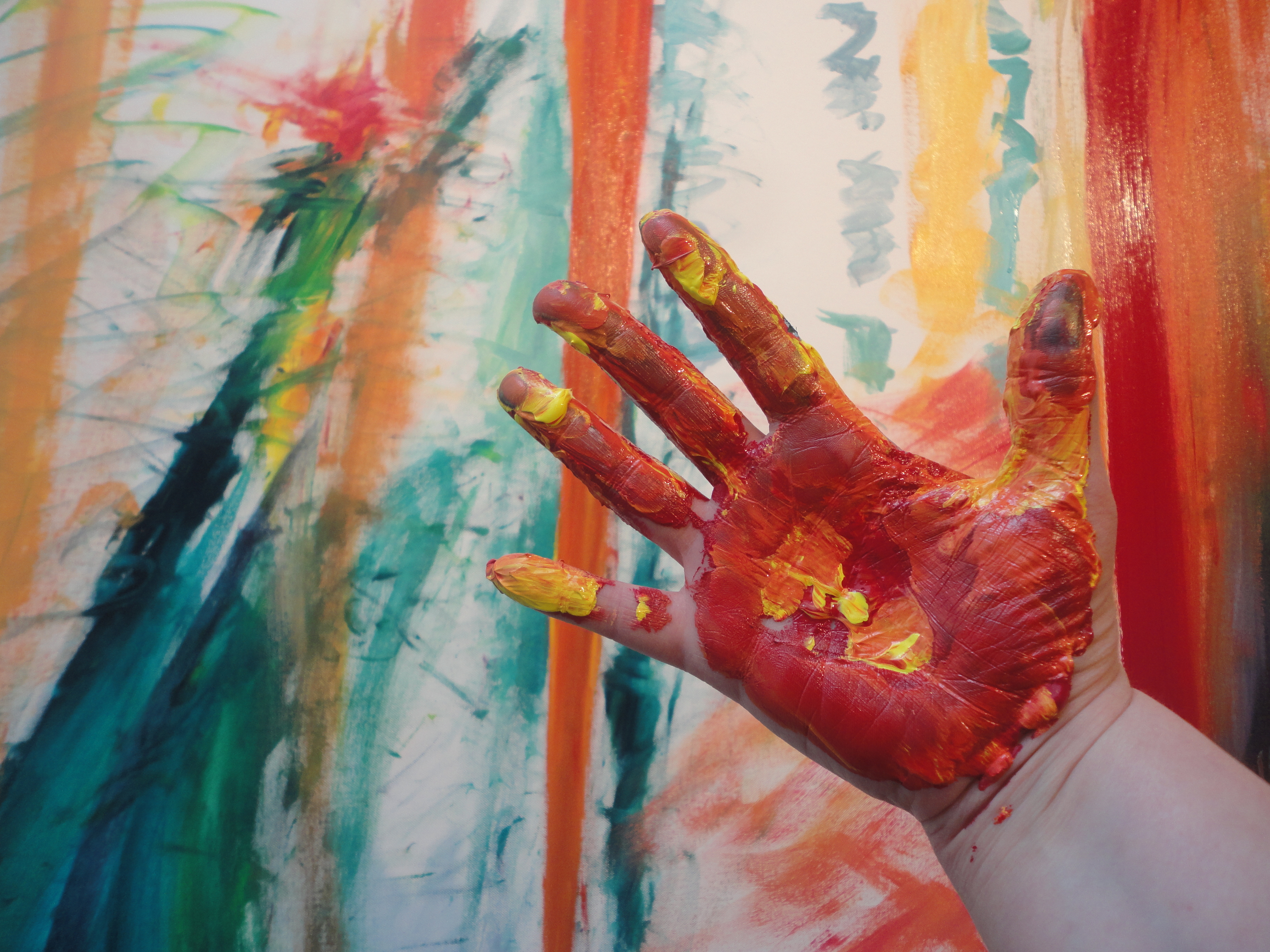
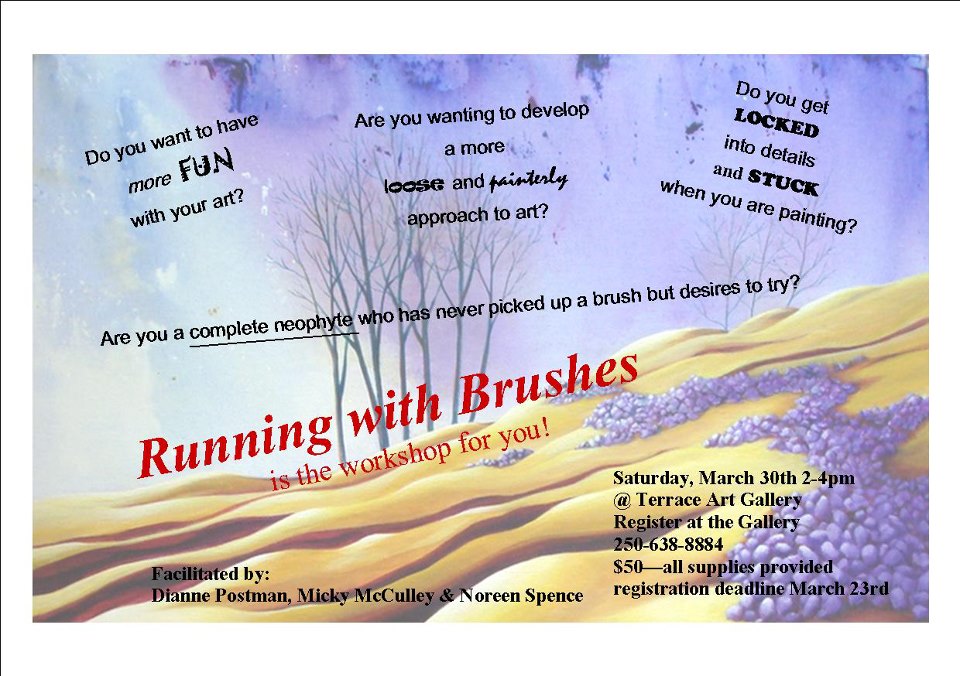
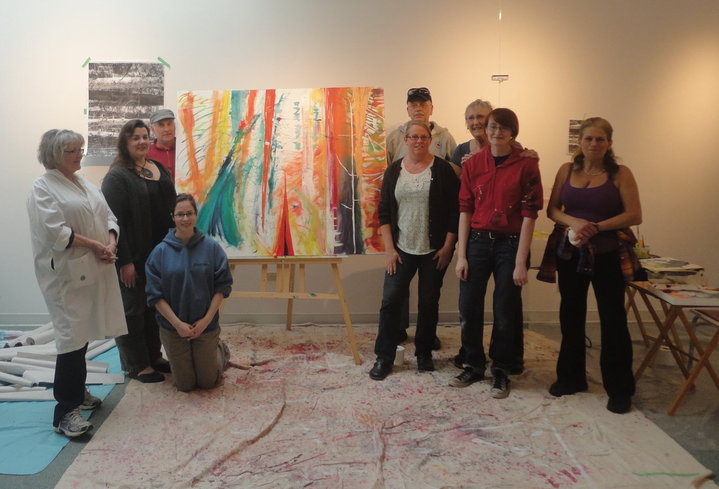
Running With BrushesMy first “official” date was a workshop called Running With Brushes, led by Noreen Spence and Dianne Postman. It was incredibly fun. And what we “put out” was . . . Well, I actually have to say, it was art. 🙂 Judge for yourself.

The two-hour paint fest was pure fun, but it also had practical carryover for my writing life—a reminder (with exuberant “practice”) to not over think, plan to death, obsess about each detail . . . just CREATE. Worry about craft and polish at some far off date when the created work is out there in full, where you can see its whole shape, wackiness, potential, nightmare spots, etc. At least that’s what I took from the workshop anyway. 🙂

I don’t know if you’re feeling a bit slumpish, or burned out, or burdened with lofty goals in whatever creative pursuit you hold dear . . . And don’t get me wrong. Goals are good. Plans are great. But artistic dreams shouldn’t feel like drudgery or chores. There will be agony and sweat and work, yes—but there should also be joy and euphoria—fun!If you’re experiencing lots of the former, not so much of the latter . . . Maybe you, like me, need to give your inner artist a play date or two. I highly recommend paint! ☺

Now I leave you with a quote Noreen gave us at the beginning of the workshop. It was exactly what I needed to hear, to remember, and to celebrate. 🙂

“Nothing is a mistake. There is no win and no fail. There’s only make.” ~ Corita Kent

Running With Brushes!

Ms. Bishop. In the Library. With the Coffee Mug.

Photo by Ev Bishop

Photo by Ev Bishop

I started to spring clean. I got as far as my library shelves and office cabinet.

I’m prone to flights of daydreaming and distraction at the best of times, but when I’m supposed to be tidying books? Heaven help me! All those ideas, all those adventures, all those life-changing worlds and words . . .

I’ve been known to box up books, only to go back and rescue select titles. I keep doubles of some novels—because they’re that good and because it is a truth universally acknowledged that if you loan books, you rarely get them back. (Of course that fact means I rarely lend in the first place, but I like doubles in case, you know, I start.)

Anyway, armed with fresh coffee, a multitude of multi-sized cardboard boxes, and a belly full of steely resolve, I headed to my miniature library.

I’d just gotten through my writing-related books (mostly keepers), when the biggest killer of productivity, house-cleaning wishes, and de-junking desires hit me: an interesting thought. My brother had been sorting my Dad’s books and commented that you can learn a lot about people from their bookcases.

I found his theory interesting. So interesting that I lost several hours to perusing titles with an eye to what secrets my books might tell about my psyche, obsessions, and beliefs, instead of focussing on whether or not I would ever actually read or refer to them again.

A deer skull (complete with lower jaw and teeth) sits atop one row of books (Christianity and other faith and religion texts). I’m not sure what that says.

A bottle of wine lounges on its side, coming of age in the lofty company of modern literary fiction greats like Joy Kogawa, Barbara Gowdy, Wally Lamb, and Eden Robinson. Why am I storing a bottle of wine there? To make the classic authors a shelf above and a shelf below jealous? Perhaps. Also, it looks kind of pretty.

I have a lot of science fiction—Orwell, Bradbury, H.G.Wells, Asimov and Silverman, Heinlein, Robert J Sawyer. . . .

A full shelf homes titles by authors who are also personal friends. And another carries autographed works. And I have a small (but growing!) section with books that carry stories by me.

I have gads of Stephen King, almost the full Merrily Watkins series by Phil Rickman (highly recommended, by the way), Diana Gabaldon’s wonderful genre-bending Outlander series, and a myriad of other scary or scintillating tales. They hulk in the shadows, balancing the sweetness and light of my Jan Karon and Maeve Binchy books.

As my children grew, I parted with any kids’ books that were lame—but as children and YA writers are top storytellers in my books (Ha ha, pun intended!), I still have one full five-shelf case of “must keeps.”

My collection is roughly 1/5 non-fiction (but within that, a full shelf is devoted to poetry), with a higher concentration of writing craft and religious texts—but lots of history, social sciences, and philosophy, too

What fascinated me most circles back to my original goal of pruning my collection. Weirdly, it’s not the best books I have the hardest time parting with. The story between the covers isn’t my only consideration—nor the information relayed, nor the style, humour, or power with which the author writes. Not even my firm “Will you ever read this again?” question actually determines whether I cull or not. No, what really hampers my ability to part with a book is the story within the story.

I bought this for Marriah and Christopher at that little bookstore when we were on holidays on the Island.

My aunt and I spotted this book at the same time. She let me have it, but I “owed” her.

This was the first book I read after my mom died.

Aw, this is the one Chris read to Christopher all the time!

Breaking Smith’s Quarter Horse! My dad was obsessed with this forever.

And that—the notion that the story within a book is only part of the reason it keeps its spot when another, arguably far superior, might be pulled—was eye opening. I’ve long fought junk collecting because I know what a trap it can become. I had no idea that the psychology behind why I hold onto some books is similar to why some people can’t get rid of broken toys, old clothes, or boxes of knick-knacks they haven’t looked at in years.

I’m happy to say I did complete my library/office weed through. I now have space to justify new books.

The shoe closet and the kitchen cupboards are next. I’m a little scared. If you think I build sentimental, unrelated attachments to books easily, you should see what I can associate with old mixing bowls or a pair of satin slippers!

– – – – – – – – – – – – – – – – – –

“Ms. Bishop. In the Library. With the Coffee Mug” by me, Ev Bishop, was originally published in the Terrace Standard, March 27, 2013 as my monthly column “Just a Thought.”