 Many years ago I quit writing. The cessation lasted two years and almost drove me crazy. When I figured out what I needed (to write, regardless of the consequences—or maybe because of the consequences of not writing), a book called The Artist’s Way by Julia Cameron was incredibly, incredibly helpful to me.
Though I’ve forgotten many of the specifics of that great book, one of Cameron’s suggestions continues to be part of the philosophical foundation I build my writing life on: Fill the Well. It’s basically just the conviction that all ideas come out of a life lived, so rather than cloister yourself away to write every minute you have time because dammit-you’re-a-writer-and-writers-write, you should do things that aren’t writing related per se without guilt, because every activity, experience, moment with others, pours into your creative well and if you don’t have non-writing time, eventually you won’t have a well to draw from—or what you do manage to dreg up will be stale and bitter.
It can be easy to forget to freshen the well. If you’re like me, your life is busy and you covet writing time and feel guilty if you have time that you could write, but don’t use it “productively.” And there’s wisdom in our you-gotta-plant-your-butt-tyranny—but there’s also a line where too much discipline squashes—where I find myself writing only out of a sense of obligation, not that agony/ecstasy feeling of I MUST WRITE TO GET THIS ALL OUT OF MYSELF OR I WILL EXPLODE.
When my writing has that “Ugh, I have to write,” versus, “I get to write” feeling, I know I have to spend some time doing other things, and ironically, it’s usually when my work/life schedule is at its most hectic and my writing time is already at its scarcest that this need to make time to do other things is crucial.
My family is out at a cadet camp this weekend and after a ticket-selling shift yesterday (good volunteering mom, eh?) and getting a brochure I needed printed for a client, I planned to get A LOT done, because I have (like always, it seems these days) A LOT to do.
Instead, I:
Made a very yummy veggie and cheddar wrap and drank two glasses of wine, sitting in the sunshine with Twisted by Jonathan Kellerman (famous novelist, new to me—am enjoying very much!)
Then I had a nap. Until 6:00 p.m.
Then I worked in my delicious smelling flowerbed and yard until 9:00. Then I poured more wine, tossed up a stir-fry and watched TV—what a treat. Very rejuvenating. Just what I needed!
Today has been low-key too: sleeping in, drinking coffee, reading short stories—and I might clean my house a bit . . . But I’m starting to feel a building urge to get to my novel—there’s a scene burning, a character screaming to be let out . . .
What about you? Do you have similar feeling about the importance of sometimes NOT writing?
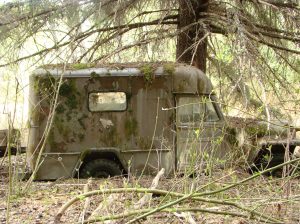
p.s. Where was that jeep found? Who did it belong to and why was it left? Last weekend found me wandering, filling the well—I hope the old ghosts don’t begrudge the pictures I took . . .
 Author Ev Bishop: page-turning stories about family, friends, and finding your true home.